

A content distribution strategy for B2B blogs is what separates a post that generates pipeline from one that sits unread. Most B2B teams spend a week writing and polishing an article, hit publish, share it once on LinkedIn, and then move on. That is “publish and pray”, and it explains why so many company blogs feel like ghost towns despite serious investment. The writing was never the bottleneck. Distribution was.
At MS Growth Lab we audit content programmes across B2B niches, and the pattern keeps repeating: teams invest the bulk of their effort in production and a sliver in distribution, when the ratio should be reversed. This guide gives you the full playbook: the four channels every distribution mix needs, the benchmarks that prove which ones work, the repurposing matrix that turns one post into seven assets, and a six-day cadence you can run after every publish.
The Four Channels Your Content Distribution Strategy for B2B Blogs Must Cover
Most teams we review run only two channels, usually the blog itself plus a company LinkedIn page, and call that a strategy. A complete content distribution strategy for B2B blogs runs four: owned, earned, paid and syndicated. Each one reaches buyers the others cannot, and skipping any of them leaves pipeline on the table.
| Channel | What it includes | Role in the mix |
|---|---|---|
| Owned | Blog, email list, newsletter, sales team, employees’ networks | Free, compounding reach; the asset you control |
| Earned | PR, podcasts, guest posts, communities, partner newsletters | Third-party credibility; citations that feed AI search |
| Paid | LinkedIn ads, sponsored newsletters, retargeting | Guaranteed reach to exact personas, on demand |
| Syndicated | TechTarget or NetLine style content networks | Pay-per-validated-lead pipeline, typically $30 to $150 per lead |
Owned comes first. Your newsletter is the highest-intent channel you control, and the data rewards doing it properly. Brevo’s email benchmark puts behaviour-triggered campaigns at around 30.6% open and 7.4% click-through rates, against roughly 20.7% and 2.3% for standard campaigns, so segment new-post alerts by topic instead of blasting the whole list. Your owned channel is only as strong as its foundations, though: before you scale distribution, make sure the blog itself converts the traffic you win. Our technical SEO audit of your Shopify store checklist walks through the speed, crawl and tracking basics that apply to any content site.
Do not publish from the company page alone. Employee advocacy typically multiplies company-page organic reach by three to eight times, and Oktopost’s B2B social media statistics roundup, which aggregates 2026 data from CMI, LinkedIn and 6sense, confirms the gap: Metricool’s 2026 LinkedIn study found personal profiles earn 63% higher engagement than company pages. Give your team a one-line prompt and a link for every post, and distribution becomes a habit instead of a favour.
Earned is where credibility compounds. A guest post or podcast appearance puts your argument in front of someone else’s trusted audience, and that third-party placement is exactly what AI search engines cite. The mix changes by vertical: our digital marketing for dental clinics guide shows how local-service niches turn local publications and partner businesses into their earned channel, while SaaS teams lean harder on podcasts and communities.
Paid is the accelerator. LinkedIn ads let you put a proven post in front of exact job titles, sponsored newsletters buy you borrowed trust at scale, and retargeting keeps the post in front of people who read but did not convert. If paid social is part of your mix, read our TikTok ads vs Meta ads for ecommerce comparison first: CPMs differ wildly across platforms in 2026, and the numbers are worth knowing before you allocate budget.
Syndicated is the channel most blogs ignore. Content syndication networks distribute your gated assets to their own audiences and charge per validated lead, typically $30 to $150 depending on how narrow your targeting is. It only makes sense once your offer converts, because you are buying names, not awareness. For teams with a proven whitepaper or benchmark report, it is often the fastest way to turn distribution spend into pipeline.
Why Most B2B Blogs Under-Distribute: The Two-Channel Trap
The benchmarks explain the trap. CMI’s 2026 B2B research found LinkedIn used by 76% of B2B marketers for thought-leadership distribution, with email newsletters second at 54%. Usage is not the problem. The problem is that usage stops there: a post goes to LinkedIn and the newsletter, and the other two channels never get a look-in.
The same research points at the fix. Among marketers who improved their results year over year, 74% credited better strategy, while only 51% credited new technology. The teams winning at distribution are not buying fancier tools. They are running a deliberate plan across all four channels while everyone else publishes and prays.

The Repurposing Matrix: One Post, Seven Outputs
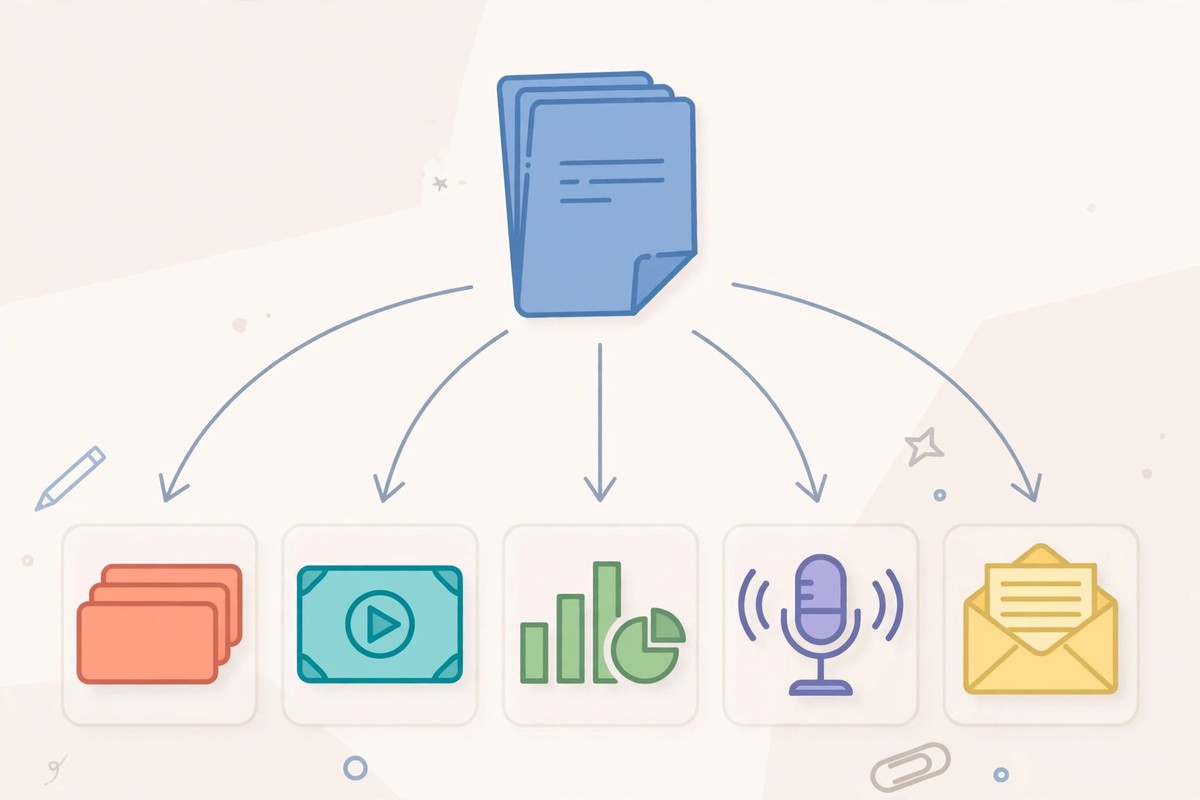
Repurposing is distribution’s force multiplier. Instead of writing seven mediocre pieces, you write one strong pillar post and reshape it into formats each channel prefers. This is the matrix to run for every major article:
- LinkedIn carousel: the post’s key framework as 8 to 10 swipeable slides.
- X thread: the sharpest five to seven takeaways, posted natively, not as a link drop.
- Newsletter feature: the post rewritten as a 300-word email with one clear CTA.
- Short video clips: two or three 60-second explainers, one per key section.
- Infographic: the data and framework visualised for Pinterest, LinkedIn and embeds.
- Podcast episode or guest pitch: the angle pitched to two relevant shows.
- Gated checklist or worksheet: the post’s process turned into a downloadable lead magnet.
Each output should be native to its channel, not a copy-paste of the article. The carousel needs its own hook, the video needs its own script. Repurposing multiplies reach only when each version respects the format it lives in.
The 20/80 Rule: Flip Your Effort Ratio
A widely cited practitioner rule of thumb says content teams should spend around 20% of their effort on production and 80% on distribution. Treat it as a heuristic, not a law, but run the maths on your own calendar. If a post takes four hours to write, the heuristic says sixteen hours should go into distributing it: repurposing, outreach, promotion and follow-up.
Almost no team actually does this, which is precisely the opportunity. The teams that flip the ratio are not producing more content. They are extracting more pipeline from every piece they already publish, and their cost per lead drops without writing a single extra word.
A 6-Day Post-Publish Cadence You Can Copy
Strategy only works if it becomes a routine. Here is a worked example of a six-day post-publish cadence, presented as a practitioner framework you can adapt, not a universal rule:
- Day 0, publish day: post goes live, newsletter segment gets the feature, founder shares it from a personal LinkedIn profile.
- Day 1: employee advocacy push, plus the post shared in two relevant communities with a genuine discussion prompt.
- Day 2: X thread and the first short video clip go out; pitch the angle to two podcasts.
- Day 3: LinkedIn carousel published, partner newsletter swap arranged, retargeting audience seeded.
- Day 4: guest-post version pitched to one industry publication, infographic published for embeds.
- Day 5: review early analytics, launch paid amplification on the best-performing organic post, brief sales on the talking points.
Run this cadence for a month and distribution stops being an afterthought. It becomes the operating system your content runs on.

Why Distribution Now Doubles as AI-Search Visibility
In 2026 there is a second reason to distribute widely: AI search. Visibility studies from 2026 estimate that the large majority, around 85%, of brand mentions in AI search answers come from third-party content rather than the brand’s own pages. When a buyer asks an AI tool for a recommendation, the answer is assembled from what others say about you, not from your blog.
That makes earned distribution a search strategy, not just a traffic strategy. Reddit threads, industry publications, podcast transcripts and community discussions are the raw material AI answers cite. Every guest post and every cited mention is doing double duty: reaching a human audience today and training the AI summaries buyers will read tomorrow. Treat the 85% figure as directional, since studies differ on methodology, but the direction is consistent across every 2026 analysis: distribute beyond your own domain, or stay invisible to AI-driven buyers.
Conclusion: Your Content Distribution Strategy for B2B Blogs Starts This Week
A content distribution strategy for B2B blogs is not a bigger content calendar. It is a decision to treat every post as the start of a campaign, not the end of a task. Cover all four channels, repurpose each pillar piece into seven outputs, flip your effort toward the 20/80 split, and run the six-day cadence until it is boring. Publish and pray is comfortable, but comfort does not build pipeline. Distribution does.
Frequently Asked Questions
What is a content distribution strategy for B2B blogs?
It is a deliberate plan for getting each blog post in front of the right B2B buyers after publishing. A complete strategy covers four channels: owned (blog, newsletter, employees), earned (PR, podcasts, guest posts), paid (LinkedIn ads, sponsored newsletters) and syndicated (pay-per-lead networks).
How much effort should go into distribution versus production?
A widely cited practitioner heuristic suggests around 20% on production and 80% on distribution. You do not need to hit those numbers exactly, but if distribution currently gets near zero planned hours, shifting even half your effort toward it will lift results.
Which channel should a new B2B blog prioritise first?
Start with owned: your email newsletter and your team’s personal LinkedIn profiles. Both are free, both compound, and the benchmarks back them up, with CMI’s 2026 research ranking LinkedIn first for thought-leadership distribution at 76%. Add earned and paid once the owned engine runs reliably.
Is paid content syndication worth it for smaller B2B blogs?
Only once your offer converts. Syndication networks typically charge $30 to $150 per validated lead, so sending paid leads to a weak landing page burns money fast. Smaller blogs should master owned and earned distribution first, then test syndication with one proven gated asset.
How does content distribution affect AI search visibility?
AI search answers draw heavily on third-party content, with 2026 studies estimating around 85% of brand mentions come from sources other than the brand’s own site. Earned distribution, such as guest posts, podcast appearances and cited mentions in industry publications, directly feeds the material AI engines quote.















1 Comment
[…] social captions, and the newsletter version in your brand voice. This pairs naturally with a solid content distribution strategy for B2B blogs, because the agent multiplies what you distribute, not just what you […]