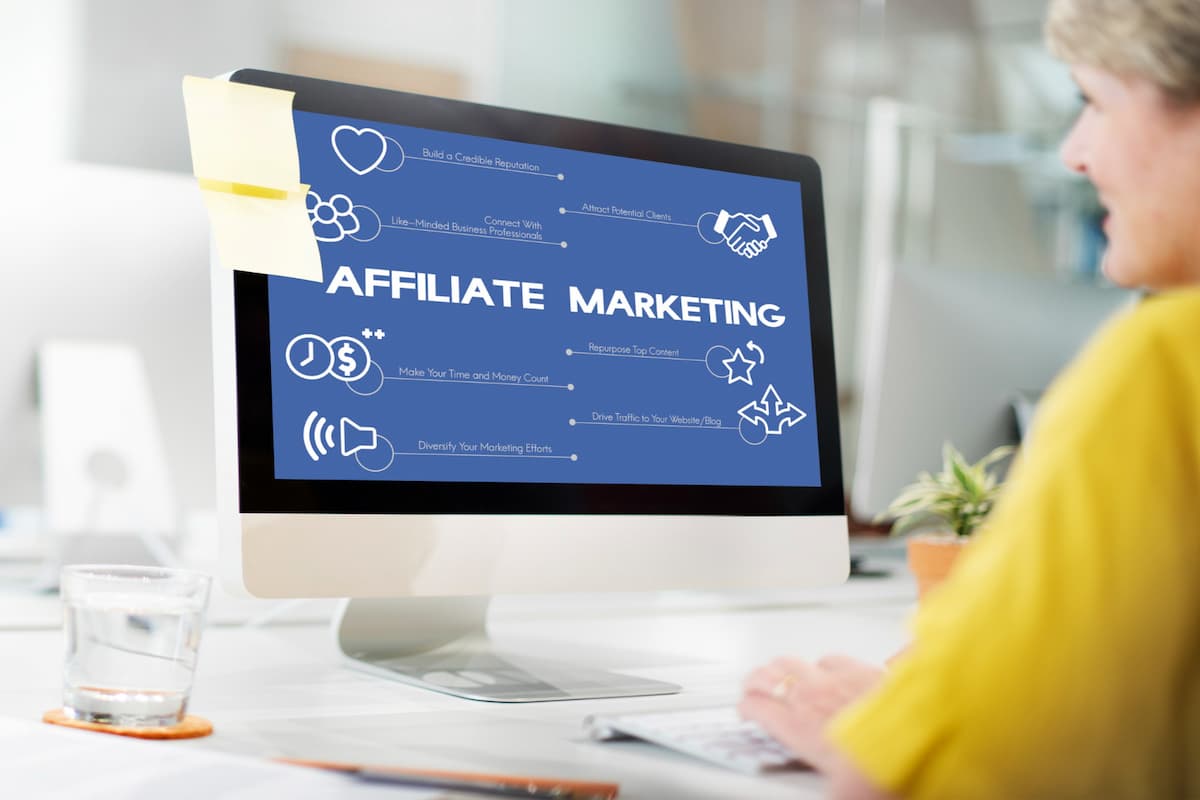


Affiliate marketing SEO improves organic rankings by helping affiliate pages match search intent, demonstrate genuine value, build topical authority and create a better experience for users. Instead of publishing product links around generic keywords, a strong affiliate SEO strategy combines keyword research, helpful content, internal linking, technical SEO, original insights and trustworthy recommendations.
Google specifically warns against thin affiliate pages that copy merchant descriptions without adding meaningful value. At the same time, Google says affiliate sites can perform well when they provide original reviews, comparisons, testing, pricing information and other useful features.
Quick Answer
Affiliate marketing SEO can improve organic rankings by:
- Targeting keywords that match real search intent
- Creating useful product reviews and comparisons
- Building topical authority around a niche
- Adding original experience, testing or analysis
- Connecting related pages with strategic internal links
- Improving technical SEO and page experience
- Keeping commercial information accurate and current
- Using descriptive, search-friendly page structures
- Earning relevant backlinks and brand mentions
- Measuring rankings, clicks and affiliate conversions
The key is simple: optimise for the user’s decision, not just the affiliate commission.
What Is Affiliate Marketing SEO?
Affiliate marketing SEO is the process of optimising an affiliate website so its pages can appear in organic search results and attract visitors who are researching products, services or solutions.
It combines traditional SEO with commercial search intent.
For example, someone searching for “best project management software for small agencies” is further along the buying journey than someone searching for “what is project management software?”
The first query may lead to an affiliate comparison page. The second is better suited to educational content.
Understanding that difference helps you build the right page for the right search.
Why Affiliate Marketing SEO Matters for Organic Rankings
SEO gives affiliate websites an opportunity to attract targeted traffic without paying for every visitor.
However, ranking alone is not enough.
A page can receive thousands of impressions and still produce weak results if it targets the wrong intent, provides little original information or makes it difficult for users to choose a product.
Effective affiliate SEO therefore focuses on three connected outcomes:
- Visibility: Get relevant pages discovered and ranked.
- Trust: Give users enough evidence to believe your recommendations.
- Action: Make the next step clear without making the page feel like an advertisement.
This is particularly important as Google Search increasingly provides AI-generated answers alongside traditional results. Google says AI Overviews and AI Mode continue to rely on foundational SEO practices, including crawlability, internal linking, useful content, good page experience and accessible text.
7 Ways Affiliate Marketing SEO Improves Rankings
1. Target Search Intent Before Search Volume
One of the biggest affiliate SEO mistakes is choosing keywords purely because they have high search volume.
Search intent should come first.
Useful affiliate keyword groups include:
- Commercial investigation: best laptops for students
- Comparison: Shopify vs WooCommerce
- Review: Bluehost review
- Alternative: alternatives to Canva
- Transactional: buy running shoes online
- Problem-solution: best CRM for small businesses
A lower-volume keyword with strong buying intent can be more valuable than a huge informational keyword that produces no conversions.
Expert insight: Before creating a page, search the keyword yourself. Study the current results and ask what type of content Google appears to favour. If most results are comparisons, publishing a basic informational article may create an intent mismatch.
2. Build Topic Clusters Instead of Isolated Affiliate Posts
A single review rarely establishes authority in a competitive niche.
Build a connected content system.
For example, an affiliate website about SEO software could have:
Pillar page:
SEO Tools Guide
Supporting pages:
- Best SEO Tools
- Ahrefs Review
- Semrush Review
- Ahrefs vs Semrush
- Best SEO Tools for Small Businesses
- Best Free SEO Tools
- SEO Tools for Keyword Research
- SEO Tools for Competitor Analysis
These pages should link naturally to one another.
This creates clearer relationships between entities, topics and subtopics while helping users discover relevant information.
Competitor guides commonly discuss topic clusters and internal linking, but combining the cluster structure with search intent and conversion stages creates a stronger editorial framework.
3. Make Affiliate Reviews More Useful Than the Merchant Page
A review should not simply repeat the manufacturer’s description.
Add information the buyer cannot easily get from the sales page.
Useful additions include:
- Who the product is best for
- Who should avoid it
- Real advantages and disadvantages
- Setup experience
- Important limitations
- Pricing considerations
- Alternatives
- Comparison with competing products
- Screenshots or original images where appropriate
- Testing methodology
- Long-term observations
Google’s guidance specifically identifies original reviews, rigorous testing, comparisons and additional product information as examples of value that can distinguish good affiliate pages from thin affiliate content.
If you have personally used a product, explain what you actually experienced. If you have not, do not manufacture first-hand experience.
4. Use Internal Links to Strengthen Topical Authority
Internal linking is one of the simplest ways to improve an affiliate website’s structure.
Instead of publishing dozens of disconnected articles, connect pages according to topic and intent.
For example:
Best Email Marketing Software
↓
Mailchimp Review
↓
Mailchimp Alternatives
↓
Mailchimp vs ConvertKit
Use descriptive anchor text that tells users and search engines what they will find after clicking.
Avoid creating large numbers of links simply to manipulate rankings. Every internal link should help users navigate the subject.
5. Optimise for Questions, Comparisons and Follow-Up Searches
Affiliate users rarely search only one query.
They may begin with:
What is the best email marketing software?
Then ask:
Which one is cheapest?
Then:
Mailchimp vs ConvertKit?
Then:
Is ConvertKit worth it for a small business?
Your content should anticipate these natural follow-up questions.
Short definitions, comparison tables, pros and cons, decision criteria and concise answers can make pages easier to understand and easier for search systems to interpret.
This also creates strong opportunities for featured snippets and AI-powered search visibility.
Google explains that AI search experiences can use multiple related searches to develop responses, making clear coverage of relevant subtopics increasingly useful.
6. Improve Technical SEO and Page Experience
Great content cannot perform at its full potential if search engines struggle to crawl or understand the website.
Check the fundamentals:
- Mobile usability
- HTTPS
- Indexability
- XML sitemap
- Canonical URLs
- Broken links
- Page speed
- Core Web Vitals
- Image optimisation
- Clean URL structure
- Logical navigation
- Proper heading hierarchy
Affiliate websites also need to watch third-party scripts, tracking tools and excessive advertising because they can make pages slower and less pleasant to use.
Technical SEO should support the content rather than distract from it.
7. Build Trust Around Commercial Recommendations
Trust is especially important when a page is recommending products that can earn you money.
Make the relationship clear.
Useful trust signals include:
- A visible affiliate disclosure
- Author information
- Editorial standards
- Testing methodology
- Updated pricing
- Clear pros and cons
- Sources for important claims
- Contact information
- About page
- Privacy policy
- Transparent review criteria
Google says affiliate links should use rel=”sponsored” so search engines can understand their commercial relationship.
Trust should not be treated as decoration. It should be built into the editorial process.
Affiliate Marketing SEO Content Types That Can Rank
Different search intents require different page formats.
| Search Intent | Recommended Content |
| Informational | Guide or tutorial |
| Commercial | Best-of list |
| Comparison | X vs Y article |
| Product research | Detailed review |
| Alternative search | Alternatives guide |
| Transactional | Product or category page |
| Problem solving | Solution-focused guide |
A common mistake is forcing every keyword into a product review.
If someone wants to understand a concept, give them education.
If they are comparing products, give them evidence and differences.
If they are ready to buy, make the purchasing decision easier.
How to Optimise Affiliate Content for AI Overviews
There is no separate trick that guarantees inclusion in Google AI Overviews.
Google explicitly states that existing SEO fundamentals remain relevant and that there are no additional technical requirements specifically for appearing in AI Overviews or AI Mode.
The practical approach is to make important information easy to identify and verify.
Use:
- Direct answers near the beginning
- Descriptive H2 and H3 headings
- Concise definitions
- Lists and tables where useful
- Original examples
- Clear comparisons
- Author expertise
- Supporting sources
- Unique observations
- Natural language
- Strong internal linking
Google’s current generative AI guidance also emphasises unique, non-commodity content and first-hand perspectives rather than simply recycling information already available elsewhere.
Common Affiliate SEO Mistakes to Avoid
Publishing Thin Product Pages
Copying merchant descriptions and adding an affiliate button does not create a useful resource.
Google specifically identifies this pattern as thin affiliation.
Chasing Only High-Volume Keywords
High volume does not automatically mean high commercial value.
A smaller keyword with strong intent may generate better revenue.
Creating Hundreds of Similar Pages
Programmatic or AI-assisted publishing can be useful when every page genuinely serves users. Creating large numbers of near-identical pages simply to capture search variations can create quality problems.
Google warns that generating many pages without adding user value can fall under scaled content abuse.
Hiding Affiliate Relationships
Commercial relationships should be transparent.
Clear disclosure improves trust and supports responsible monetisation.
Ignoring Existing Content
Sometimes the easiest ranking opportunity is an article you already have.
Look for pages ranking in positions 5 to 20, then improve:
- Search intent alignment
- Missing subtopics
- Internal links
- Examples
- FAQs
- Title and description
- Freshness
- Original insights
A Practical Affiliate Marketing SEO Workflow
Use this process for every important affiliate topic:
1. Find the keyword
Identify relevant keywords and long-tail variations.
2. Analyse intent
Determine whether users want information, comparisons, reviews or a purchase.
3. Study the SERP
Look at the content formats, questions and entities appearing in competing results.
4. Find the content gap
Identify useful information competitors have missed or explained poorly.
5. Create a better page
Add original examples, practical recommendations and clearer explanations.
6. Connect the page internally
Link it to related guides, reviews and comparison pages.
7. Optimise technical elements
Check indexing, speed, mobile experience, images and structured data.
8. Build authority
Earn relevant editorial links, mentions and references.
9. Measure performance
Track impressions, clicks, rankings, conversions and affiliate revenue.
10. Update the page
Refresh outdated prices, features, screenshots, examples and recommendations.
What Competitors Are Missing
The current competing content is generally strong on the fundamentals. Elementor focuses on helpfulness and avoiding thin affiliate content; GitNexa provides a broad 2026 strategy covering keywords, reviews, comparisons and technical SEO; Hostinger provides practical optimisation tips; Mangools offers a comprehensive beginner guide; and Digistore24 goes further into AI search, content architecture and measurement.
The stronger opportunity is to combine these ideas without producing another extremely long guide.
This article therefore adds emphasis on:
- Search intent before keyword volume
- Decision-stage content mapping
- Content clusters and entity relationships
- First-hand evidence and honest limitations
- Internal-link architecture
- AI Overview and AI Mode readiness without gimmicks
- Affiliate link qualification
- Content refresh workflows
- Conversion-focused SEO measurement
- Practical content-gap analysis
- Avoiding scaled, repetitive affiliate content
That combination creates a more useful resource for someone who actually wants to grow an affiliate website.
How Long Does Affiliate SEO Take to Improve Rankings?
There is no guaranteed timeframe.
New websites may need considerable time to establish authority, while an established website can sometimes improve existing pages much faster.
Your results depend on factors such as:
- Competition
- Domain authority and reputation
- Content quality
- Search intent
- Backlink profile
- Technical health
- Topic authority
- Website history
- Query difficulty
- Content freshness
Rather than expecting a fixed ranking timeline, monitor impressions, clicks, average positions and conversions in Google Search Console and your analytics platform.
Conclusion
Affiliate marketing SEO improves organic rankings by turning affiliate pages into genuinely useful resources rather than thin pages built around referral links.
The strongest strategy combines search intent, topical authority, original insights, internal linking, technical SEO, trustworthy recommendations and ongoing optimisation.
Do not try to create the largest affiliate website.
Create the most useful resource for the specific decision your searcher is trying to make.
That approach aligns SEO with user experience, conversions and the direction of modern Google Search, including AI-powered search experiences.
Frequently Asked Questions
1.What is affiliate marketing SEO?
Affiliate marketing SEO is the process of optimising an affiliate website and its content to attract relevant organic search traffic and generate commissions through product or service referrals.
2.Does affiliate marketing SEO improve Google rankings?
Yes, effective affiliate marketing SEO can improve organic visibility when pages satisfy search intent, provide genuine value, demonstrate expertise and follow Google’s technical and spam policies. Affiliate links themselves do not guarantee rankings.
3.How do I choose keywords for affiliate marketing SEO?
Choose keywords based on search intent, relevance, competition and commercial value. Terms such as “best”, “review”, “vs”, “alternatives” and product-specific problem searches often indicate users are evaluating solutions.
4.Can AI-generated affiliate content rank on Google?
AI can assist with research, structure and drafting, but mass-producing low-value pages can create problems. Google recommends focusing on accuracy, quality, relevance and original value rather than producing content at scale simply for search traffic.
5.How can affiliate marketing SEO help with AI Overviews?
The best approach is to follow strong SEO fundamentals while creating unique, useful and well-structured content. Google says there are no special AI Overview requirements, so focus on crawlability, helpful content, clear organisation, internal links, page experience and original insights.