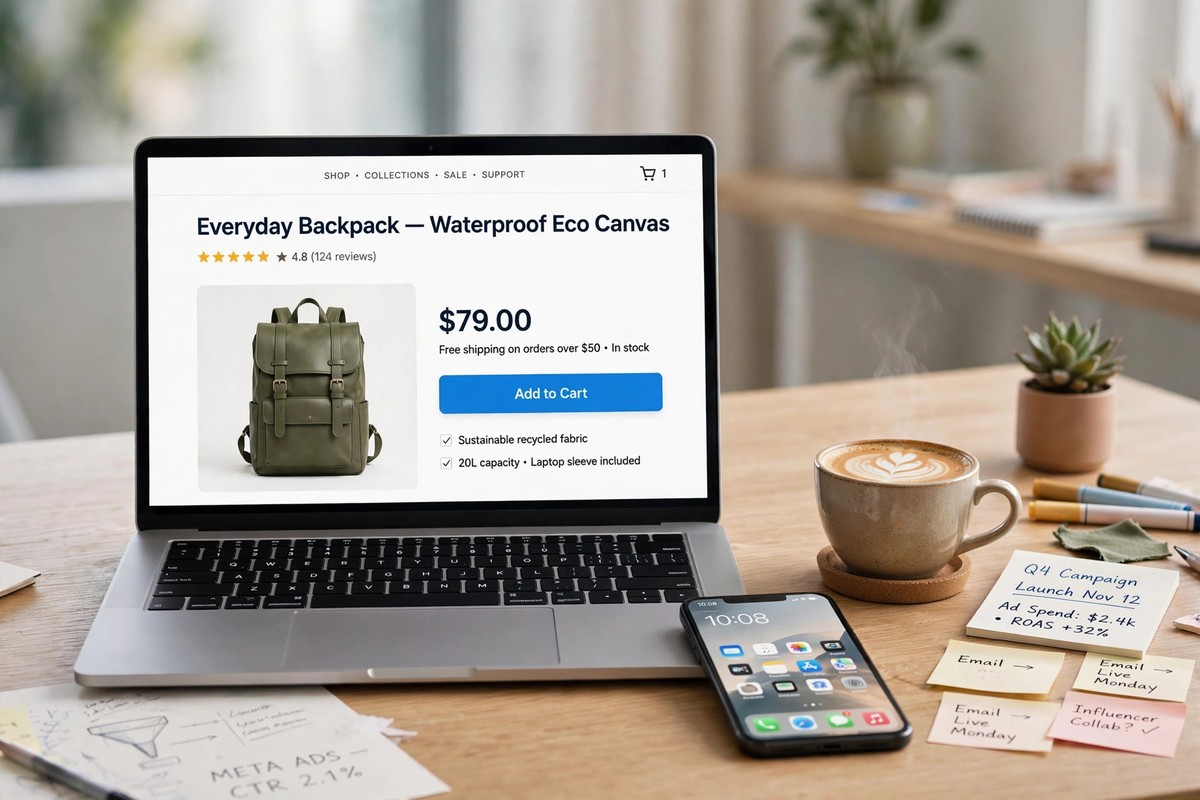

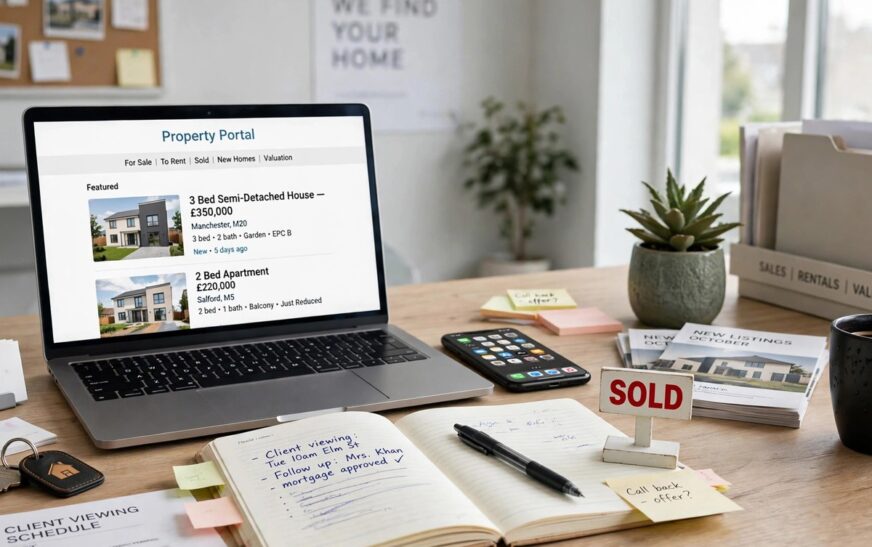
Digital marketing for real estate agents 2026 is not about being everywhere. It is about showing up where buyers and sellers actually look, capturing their details, and following up faster than the next agent. Most buyers spend weeks researching online before they ever call anyone, and the agents winning listings are the ones with a system: local search visibility, useful content, smart ads and follow-up that responds in minutes. This guide gives you that system, channel by channel.
Digital Marketing for Real Estate Agents 2026: The Playbook at a Glance
Every strong agent marketing setup has the same five pillars: a Google Business Profile that dominates local search, a fast website that converts, hyperlocal content that proves expertise, paid ads that buy attention where it counts, and follow-up automation so no lead goes cold. Get those five right and the rest is optimisation.
| Channel | What it costs | Best for | Speed of results |
|---|---|---|---|
| Google Business Profile | Free | Local calls and map visibility | Weeks |
| Local SEO + content | Time (or £500+/mo outsourced) | Compounding organic leads | 3-6 months |
| Google Search Ads | £500-£2,000+/mo typical | High-intent buyer/seller leads now | Days |
| Meta (Facebook/Instagram) ads | £300-£1,500/mo typical | Retargeting, listings, brand | Days |
| Video / short-form | Time + basic kit | Trust and reach | Weeks |
| Email + CRM automation | £30-£150/mo tools | Nurturing long-cycle leads | Ongoing |
1. Own Local Search: Google Business Profile and Reviews
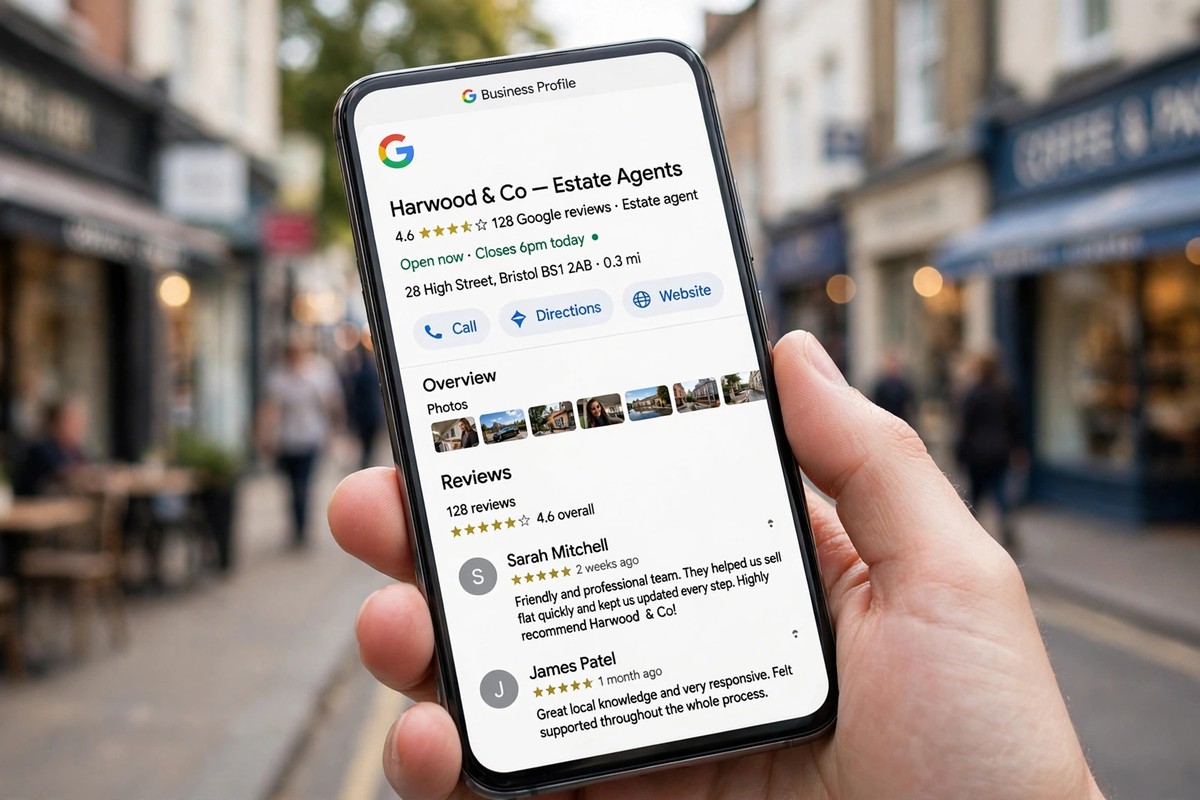
Before spending a pound on ads, claim and optimise your Google Business Profile. Choose the right primary category, list your service areas, add fresh photos of listings and the neighbourhood weekly, and post updates. Ask every happy client for a review with a direct link, and reply to each one within a couple of days. This is the highest-return free tool in an agent’s kit, and most agents underuse it. Pair it with a solid keyword research habit so you know exactly which neighbourhood phrases buyers type.
2. Build a Website That Converts, Not a Brochure
Your site needs three things: fast mobile pages, property search that does not frustrate, and clear next steps on every page. Add short forms (name, intent, timeline), a book-a-valuation calendar link, and click-to-call on mobile. Publish neighbourhood guides with schools, commute notes and recent sales trends; these pages rank for the long-tail searches buyers actually make and feed your social content for months. A strong SEO content strategy turns those guides into a compounding traffic engine.
3. Split Your Funnels: Buyers and Sellers Need Different Marketing
Agents market to two audiences with different timelines. Buyers move in weeks and respond to listings, alerts and area guides. Sellers take months and respond to valuation tools, sold prices in their street and proof you sell homes like theirs. Run separate landing pages and ad campaigns for each. Sending seller-intent traffic to a generic listings page is one of the most common budget leaks in real estate marketing.
4. Use Video, But Keep It Simple
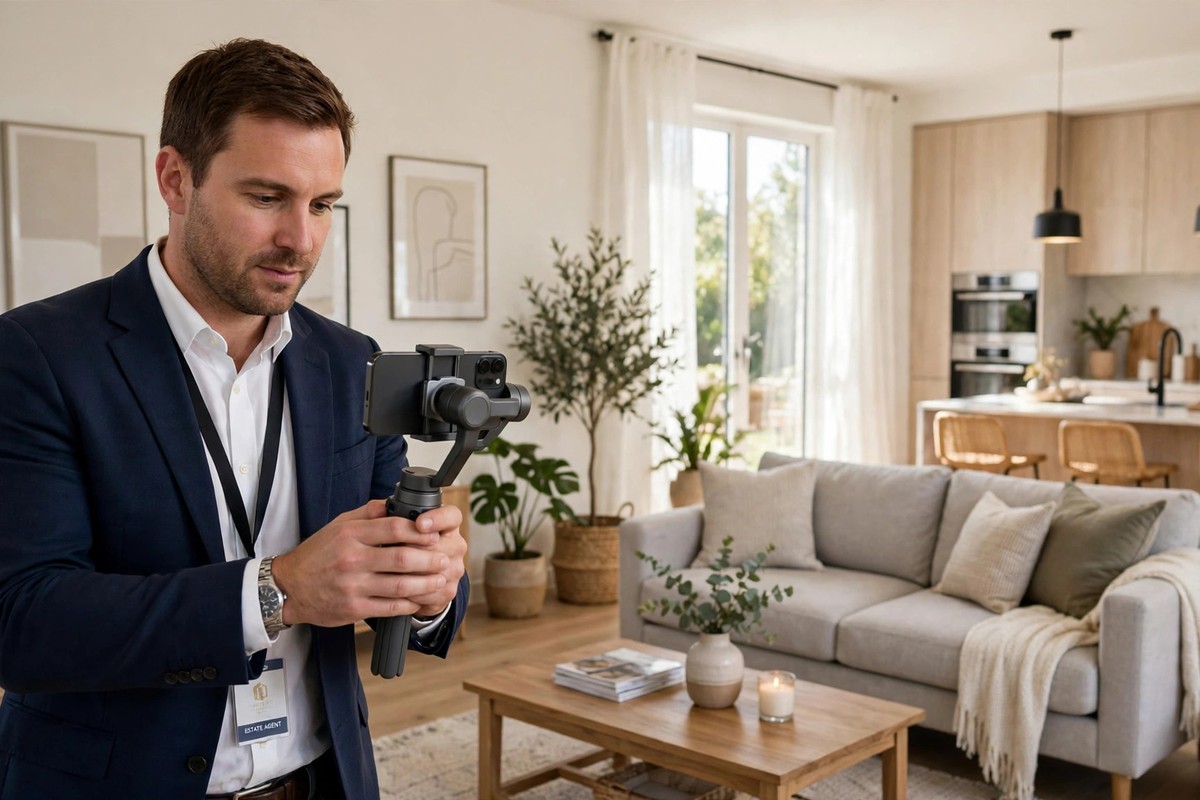
You do not need a production crew. A phone, decent light and a steady hand are enough for listing walk-throughs, 60-second market updates and street tours. Short-form video on Instagram, TikTok and YouTube Shorts builds familiarity at scale, and it doubles as content for your site and email. Our guide to AI video generators for marketing teams shows how to speed up editing without losing the human touch.
5. Run Paid Ads With Discipline
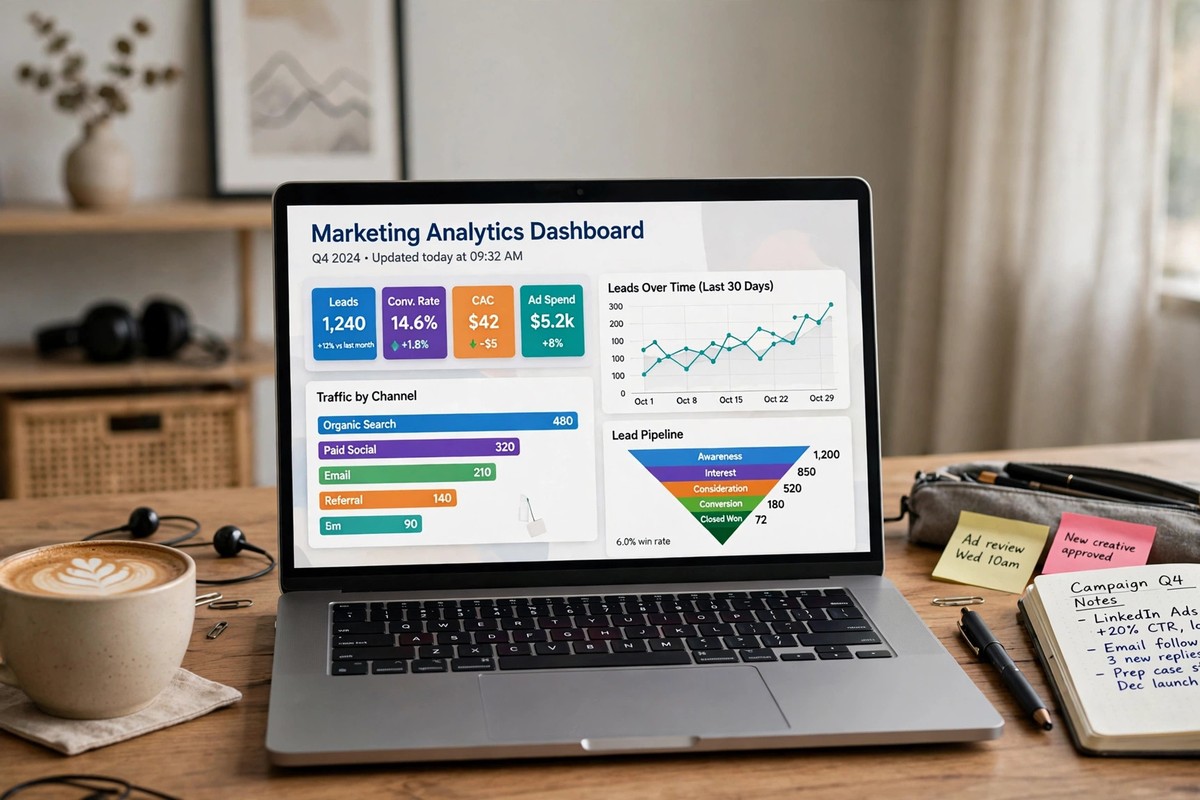
Google Search Ads buy high-intent clicks: “estate agent [area]”, “sell my house [town]”, “flats for sale [neighbourhood]”. Send every click to a landing page that matches the query, with one clear action. Meta ads are better for retargeting site visitors, promoting new listings and pushing lead magnets like valuation reports. Track cost per lead, appointment rate and cost per closed deal by channel, then shift budget monthly toward what closes. Start with a realistic budget: many solo agents begin around 5 to 10% of gross commission income.
6. Follow Up in Minutes, Nurture for Months
Speed wins listings. Set up instant text and email alerts for new enquiries, aim to respond within five minutes during working hours, and use an after-hours auto-reply with a booking link. Then nurture: monthly market updates, new listings matching their criteria, and check-in sequences. The average buying journey stretches over months, so the agent who stays helpfully in touch wins the instruction. Repurposing one piece of content, like a market update video, across email, social and your blog keeps this sustainable.
Conclusion
Digital marketing for real estate agents 2026 comes down to a simple loop: be findable locally, convert visitors with a fast site, advertise with discipline, and follow up relentlessly. You do not need enterprise tools or a big team. You need the five pillars working together, measured monthly, and improved steadily. Start with your Google Business Profile this week; everything else compounds from there.
Frequently Asked Questions
How much should a real estate agent spend on digital marketing?
For digital marketing for real estate agents 2026, a common starting point is 5 to 10% of gross commission income, which for many solo agents means a few hundred to a couple of thousand pounds a month. Spend the free channels first (Google Business Profile, reviews, organic social), then add paid ads once your site converts.
Should I do my own marketing or hire an agency?
Do the basics yourself: profile optimisation, reviews, phone-shot video and consistent posting. Outsource what needs specialist skill or scale: website builds, ongoing SEO content and paid ads management. Many agents run a hybrid and it works well.
Are property portals enough, or do I need my own website?
Portals rent you attention; your site builds an asset. Portal leads go to whoever pays most, while your own site, email list and reviews compound in value and keep working when ad budgets pause. Use portals, but never let them be your only channel.
Do I really need video?
Not cinema-grade video, but some video, yes. Buyers increasingly expect to see homes and hear market takes on video, and short clips are the cheapest trust-building content available. A phone and consistency beat a polished quarterly production.
How do I measure if my marketing is working?
Track four numbers monthly: leads by channel, appointments booked, cost per lead and cost per closed deal. If a channel cannot show appointments or deals after a fair test, reallocate its budget to one that can.