

If your B2B pipeline needs more qualified conversations, a LinkedIn content strategy for B2B lead generation is the highest-leverage place to start. A 2026 digitalapplied.com compilation reports roughly 80% of B2B social leads come from LinkedIn, with other 2026 pieces citing 75 to 85%. Yet only about 3% of members post more than once a week, so your competitors are barely showing up. Here at MSGrowthLab we see the same gap across B2B clients. This guide gives you a 30-day posting plan for a one-person team: the case for LinkedIn, cadence and formats, and the conversion layer that turns attention into leads.
Why LinkedIn Wins for B2B Lead Generation
LinkedIn has roughly 1.3 billion members, per Satya Nadella on Microsoft’s FY2026 Q3 earnings call, and it is the one major platform where buyers arrive in a professional frame of mind. That context changes everything: the same post that would feel like an interruption on Instagram reads as useful thinking on LinkedIn.
The trust case is stronger: the 2025 Edelman-LinkedIn study found that 71% of B2B decision-makers say thought leadership beats traditional product marketing. One caution: no plan can promise a specific lead count. Every stat here is attributed to its study, and results vary with your niche and offer.
Personal Profiles Beat Company Pages: The 8x Gap
Most B2B teams miss this: personal profile posts get roughly 8x more engagement and around 5.6x more organic reach than company-page posts, with engagement of about 10.7% versus roughly 1.3%, per digitalapplied.com and contentin.io 2026 data. People follow and trust people, not logos.
Centre your 30-day plan on founder and team voices, not the company page. Keep the page polished as a trust checkpoint, because prospects will visit it before replying, but do not expect reach from it. A handful of employees posting in their own authentic voice will out-pull any amount of scheduled page content.
Cadence, Timing and Formats: What the 2026 Data Shows
For individual creators, 3 to 5 posts per week is the sweet spot for reach and follower growth, per contentin.io’s October 2026 data. For company pages, thinkpodagency’s October 2026 guidance says 2 to 5 per week, while Socialinsider’s 2026 study of 22,000 B2B pages found 6 to 8 per week earned roughly 58% higher engagement per post. Minimum 3 per week, optimal 5 to 7 on business days, and consistency beats perfect timing.
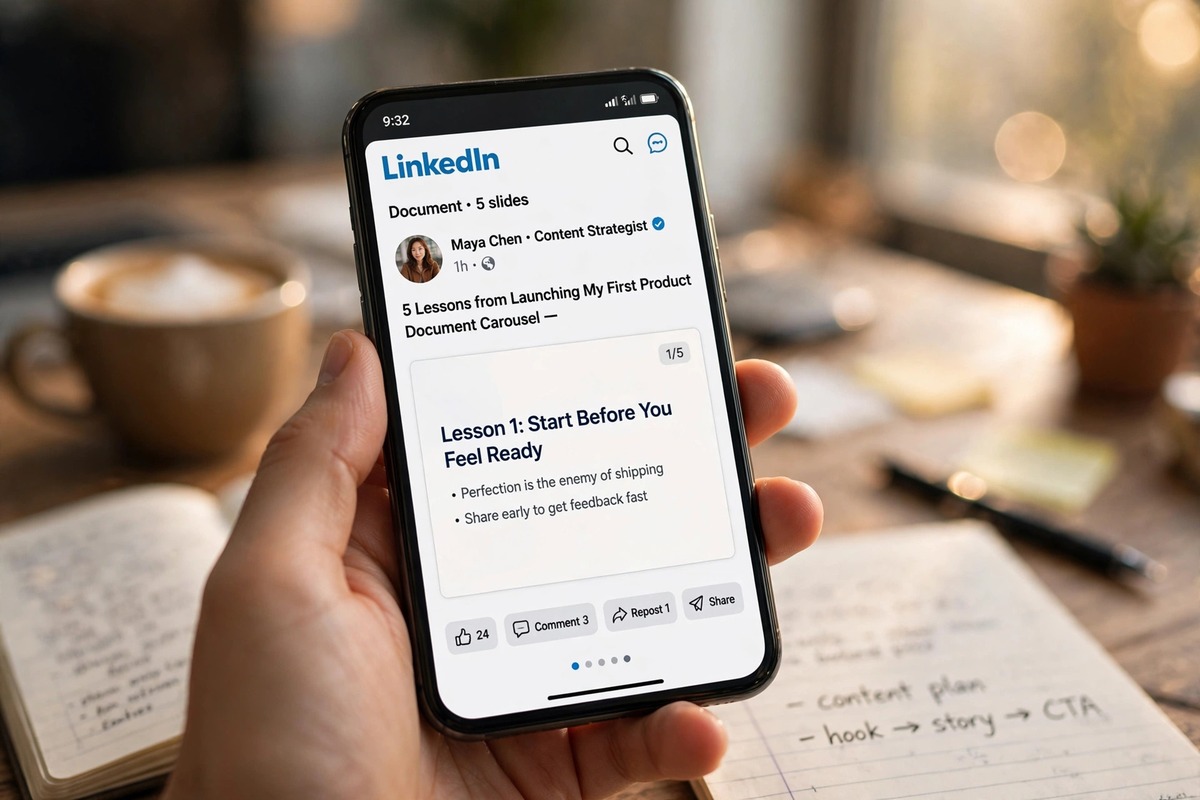
Post Tuesday to Thursday, ideally 7 to 8 AM in your audience’s local time, per digitalapplied. On formats, native document and carousel posts lead with roughly 7.00% engagement in Social Insider’s 1.3M-post study, and about 39% more reach than average in AuthoredUp’s 3M-post study. Native video and polls round out the top three. Beware the link post: pushing readers off-platform carries an engagement penalty of roughly half, so put links in the first comment.
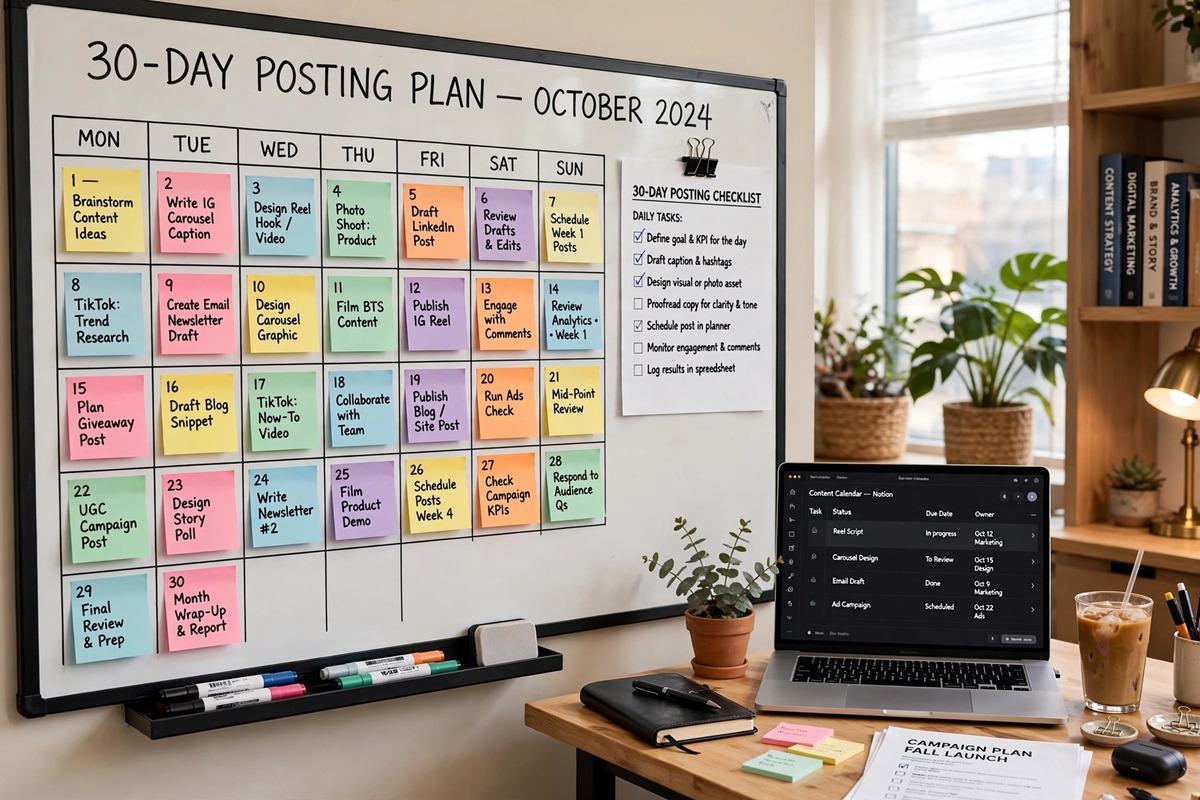
The 30-Day LinkedIn Content Strategy for B2B Lead Generation Plan
Built for a one-person marketing team: batch your writing one morning a week instead of scrambling daily. Lead every post with a sharp two-line hook, because the lines before the “see more” cutoff do most of the work.
Week 1: Profile and Positioning Foundation
Turn your profile into a landing page first. Rewrite your headline around who you help and the outcome you produce, front-loading buyer search keywords. Rebuild the About section around client problems, not your work history, and pin two authority posts to Featured. Then publish two posts: one problem-aware education post naming a pain your buyer feels, and one contrarian point of view that challenges category wisdom. Thought leadership earns follows; promotions earn ignores.
Week 2: Cadence and Formats
Set the rhythm with three posts in the top formats. Publish a native document or carousel, ideally a teardown or checklist that keeps readers swiping. Run a poll on a genuine industry question. Post one native video, under two minutes, answering a question from sales calls. Spread them across Tuesday to Thursday mornings. If you already make short-form video elsewhere, repurpose it through a content distribution strategy for B2B blogs and social, since one recording can feed LinkedIn, your blog and your newsletter for weeks.
Week 3: Engagement Sprints
Posting is only half the system. Run comment-first sprints: leave thoughtful comments on 10 prospect posts per day, adding a genuine angle rather than “great post”. This puts you in front of their audiences and warms every future connection request. Keep posting three times a week, and ask one colleague to repost your best post with their own take.
Week 4: Conversion Layer
Attention only matters if it converts. Launch a LinkedIn newsletter, or publish one lead-gen form post offering a genuinely useful magnet such as a diagnostic checklist. A useful magnet converts far better than a “book a demo” post. Then follow up by DM with people who engaged: reference their comment, offer the resource, never pitch on the first message. Learn how to measure digital marketing ROI for small business too, because tagging LinkedIn-sourced conversations in your CRM is what proves the channel works. End the week by reviewing analytics and doubling down on what generated conversations, not just applause.
The Daily Non-Negotiable: Reply in the First 90 Minutes
One habit separates growing accounts from stalled ones: reply to every comment within the first 90 minutes. First-hour engagement multiplies distribution, because the algorithm reads fast, genuine conversation as a signal the post deserves a wider audience. Treat the reply window as part of the post itself.
Never use engagement bait. “Comment YES for the guide” style posts are flagged in 2026 guides as tactics that train your audience to engage without buying. On paid, promote your best-performing organic posts to tightly defined audiences rather than boosting whatever is newest, the way advertisers compare TikTok ads vs Meta ads costs before spending, organic performance should tell you what deserves budget.

Conclusion
A LinkedIn content strategy for B2B lead generation comes down to five commitments: post from personal profiles because of the 8x engagement gap, keep a 3 to 5 post weekly cadence on Tuesday to Thursday mornings, lead with native document carousels, video and polls while keeping links out of the post body, reply to every comment in the first 90 minutes, and add a conversion layer of newsletters, lead magnets and DM follow-ups in week four. Batch the writing one morning a week, and thirty days of consistency will make you the most useful voice your prospects see.
Frequently Asked Questions
For a LinkedIn content strategy for B2B lead generation, should I post from my personal profile or the company page?
Both, but prioritise personal profiles. Per digitalapplied.com and contentin.io 2026 data, personal posts get roughly 8x more engagement and about 5.6x more organic reach than company-page posts. Keep the page polished as the trust checkpoint buyers visit before replying, and drive reach through personal posting.
Do links in LinkedIn posts hurt reach?
Yes. Posts that push readers off-platform carry an engagement penalty of roughly half. Publish natively with no link in the body, then add the link as the first comment. Native carousels, video and polls out-perform bare link posts for exactly this reason.
How many times per week should a one-person marketing team post on LinkedIn?
Three to five posts per week is the evidence-backed sweet spot for individual creators, per contentin.io’s October 2026 data. Batch them: write everything in one morning, schedule for Tuesday to Thursday, and spend the rest of the week on replies and comment sprints. A sustainable three per week beats an ambitious seven that collapses by week three.
How do I turn LinkedIn engagement into actual leads without being pushy?
Use the content-to-DM path. Publish valuable content, engage genuinely in the comments, and open conversations with people who signal interest, referencing something specific they said. Never pitch on the first message; offer the resource the post promised. Pair this with a lead magnet post and tag every LinkedIn-sourced conversation in your CRM.
Should I use a LinkedIn newsletter or a lead-gen form post?
Both work at different stages. A newsletter builds a recurring audience that compounds trust over months. A lead-gen form post with a specific, useful magnet converts faster, because LinkedIn’s native forms pre-fill from the member’s profile. Start with the form post in week four, then launch the newsletter once cadence feels routine. The LinkedIn content statistics from ContentIn confirm the format and cadence data behind both.