
Shopping used to mean queuing at the till, driving to a shop before it closed, or settling for whatever stock was left on the shelf. Business-to-consumer E-Commerce Optimization has changed all of that. It lets people buy directly from brands and retailers online, at any hour, from any location, using nothing more than a phone or laptop.
So why is business-to-consumer e-commerce so convenient? In short, it removes the time, location, and choice limits that come with traditional shopping, giving customers control over how, when, and where they buy.
What Is Business-to-Consumer E-Commerce?
Business-to-consumer (B2C) e-commerce refers to online transactions where a business sells products or services directly to individual customers, rather than to other businesses. Common examples include online clothing retailers, food delivery apps, and streaming subscription services. Unlike business-to-business (B2B) models, B2C is built around individual buying habits, quick decisions, and personal preference.
Why Is Business-to-Consumer E-Commerce Convenient?
The convenience of B2C e-commerce comes down to a few core factors that solve real problems shoppers face every day.
24/7 Shopping Access
Physical shops have opening hours. Online stores don’t. Customers can browse and buy at midnight, during a lunch break, or while commuting, without waiting for a shop to open.
Wider Product Choice and Easy Comparison
A single website can list thousands of products from multiple brands. Shoppers can compare prices, read reviews, and check specifications side by side, something that’s far harder to do in a physical shop.
Personalised Shopping Experience
Most B2C platforms use browsing history and past purchases to recommend relevant products. This saves time and helps customers discover items they might not have found otherwise.
Faster Checkout and Multiple Payment Options
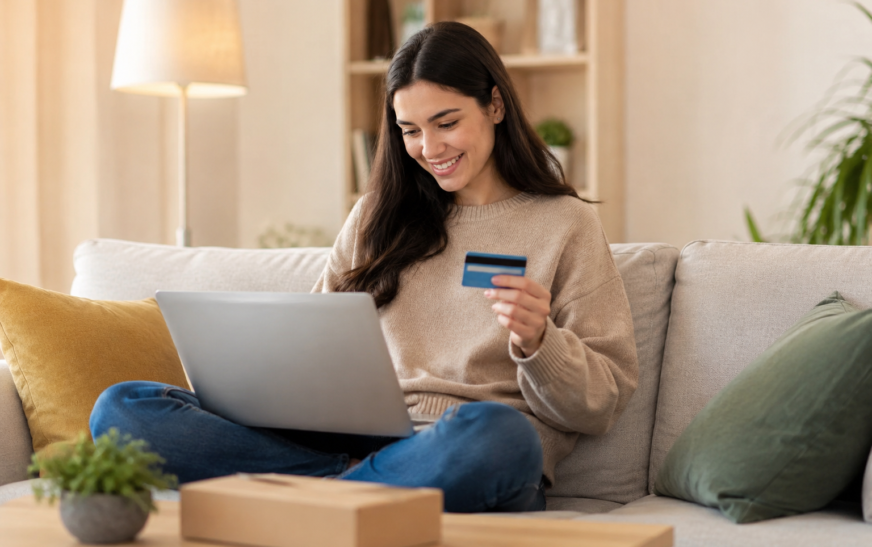
Saved card details, one-click checkout, and options like digital wallets or buy-now-pay-later schemes mean transactions take seconds rather than minutes.
Doorstep Delivery and Flexible Returns
Products arrive at the customer’s door, often within a day or two. Most retailers also offer straightforward return policies, which reduces the risk of buying online without seeing an item first.
Real-Life Examples of B2C E-Commerce Convenience
Retailers like ASOS and Amazon let shoppers order clothing or electronics with next-day delivery. Food delivery platforms such as Deliveroo connect diners with local restaurants without a phone call. Subscription services like Netflix or Spotify give customers instant access to entertainment without visiting a shop at all. Each example shows the same pattern: less effort, less waiting, more choice.
Latest Industry Statistics and Trends
Global retail e-commerce sales have continued to grow steadily year on year, with industry researchers such as Statista and eMarketer tracking figures well into the trillions of dollars. Mobile commerce now accounts for a growing share of that spend, as more shoppers complete purchases directly from their phones rather than a desktop. Same-day and next-day delivery have also shifted from being a bonus to a standard customer expectation.
These figures move quickly, so it’s worth checking the latest Statista or eMarketer reports before quoting exact numbers in client-facing work.
Common Mistakes Businesses Make with B2C E-Commerce
- Overcomplicating the checkout process with too many steps
- Ignoring mobile users, despite most traffic coming from phones
- Offering limited payment options
- Giving unclear or vague delivery information
- Writing thin product descriptions that leave customers unsure
Expert Tips for a Seamless B2C Experience
- Keep checkout to three steps or fewer
- Offer at least two delivery speed options
- Use clear, honest product images and descriptions
- Make returns simple to reduce purchase hesitation
- Test the mobile experience regularly, not just desktop
Key Takeaways
- B2C e-commerce is convenient because it removes time, location, and choice barriers
- 24/7 access, wider choice, and fast checkout are the biggest convenience drivers
- Delivery speed and easy returns strongly influence customer trust
- Businesses benefit from lower overheads and direct access to customer data
- Mobile-friendly design is essential, not optional
Conclusion
Business-to-consumer e-commerce is convenient because it puts shopping on the customer’s terms. There’s no need to plan around opening hours, travel to a shop, or settle for limited stock. Everything from browsing to delivery happens on the customer’s own schedule.
For businesses, understanding why business-to-consumer e-commerce is convenient isn’t just useful background knowledge. It’s the foundation for building a store that customers actually want to use. If you’re reviewing your own online store, start with checkout speed and Affiliate Marketing mobile experience. These two areas have the biggest impact on whether convenience actually turns into a completed sale.
Frequently Asked Questions
1.What does B2C e-commerce mean?
B2C e-commerce means a business sells products or services directly to individual customers online, rather than to other businesses.
2.Why is business-to-consumer e-commerce convenient for customers?
It offers 24/7 access, wider product choice, fast checkout, and home delivery, removing the need to visit a physical shop.
3.What is the biggest advantage of B2C e-commerce for businesses?
Lower overheads and the ability to reach customers beyond a local area are among the biggest advantages.
4.Is B2C e-commerce safe for online shopping?
Reputable B2C retailers use secure payment gateways and encryption, making online shopping generally safe when using trusted websites.
5.How is B2C different from B2B e-commerce?
B2C sells directly to individual consumers, while B2B involves transactions between businesses, usually with larger order volumes and longer sales cycles.