
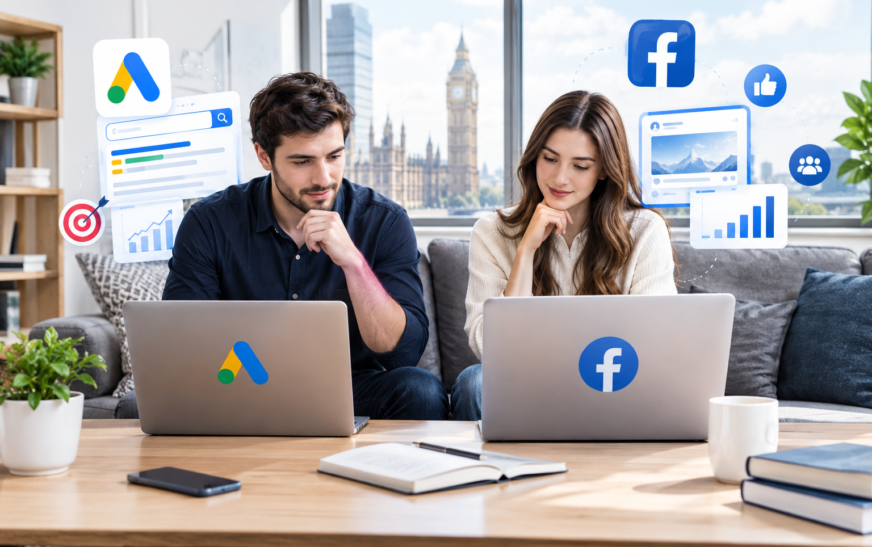
Choosing between Google Ads vs Facebook Ads is one of the biggest decisions small businesses face when investing in online advertising.
Both platforms can generate customers, leads and sales, but they work in completely different ways.
Google Ads and Google Ads Keywords helps businesses reach people who are already searching for a product or service, while Facebook Ads helps businesses introduce their products to potential customers who may not know about them yet.
The right choice depends on your business type, marketing goals, budget, customer journey and how quickly you need results.
In this guide, we compare Google Ads and Facebook Ads for small businesses, including costs, targeting, return on investment (ROI), examples and when you should use each platform.
Google Ads vs Facebook Ads: The Quick Difference
Google Ads captures existing demand, while Facebook Ads creates new demand.
A simple way to understand the difference:
| Comparison Factor | Google Ads | Facebook Ads |
| Main purpose | Capture customers searching | Create awareness and interest |
| User intent | High | Low to medium |
| Best for | Leads, services, urgent needs | Branding, ecommerce, discovery |
| Targeting | Keywords and search behaviour | Interests, demographics and behaviour |
| Buying stage | Ready to purchase | Early research stage |
| Creative importance | Medium | Very high |
What Are Google Ads?
Google Ads is Google’s paid advertising platform that allows businesses to appear in search results, shopping results, YouTube and across Google’s advertising network.
The most popular type is Google Search Ads.
For example, someone searches:
“best accountant in Manchester”
Businesses offering accounting services can appear at the top of Google search results.
This means the customer already has intent. They are actively looking for a solution.
Google Ads includes:
- Search Ads
- Google Shopping Ads
- Display Ads
- YouTube Ads
- Performance Max campaigns
- Remarketing campaigns
For many small businesses, Google Ads works particularly well because it connects businesses with customers at the exact moment they need their service.
What Are Facebook Ads?
Facebook Ads, now managed through Meta Ads Manager, allows businesses to advertise across:
- Messenger
- Meta Audience Network
Unlike Google Ads, users are not usually searching for a product when they see a Facebook advert.
Instead, Facebook uses data such as:
- Interests
- Online behaviour
- Location
- Demographics
- Previous interactions
to show relevant adverts to potential customers.
For example:
Someone scrolling Instagram may see an advert for a new fitness programme, clothing brand or restaurant offer.
They were not actively searching for it, but the advert creates interest.
This makes Facebook Ads powerful for:
- Ecommerce brands
- New products
- Events
- Restaurants
- Fashion businesses
- Lifestyle brands
Google Ads vs Facebook Ads: Which Gives Better Results?
The answer depends on your business model.
There is no universal winner.
A local emergency service company will usually perform better with Google Ads because customers are already searching.
An online clothing brand may achieve better results with Facebook Ads because customers need to discover the products first.
The best advertising platform is the one that matches your customer’s buying journey.
Google Ads for Small Businesses
Advantages of Google Ads
1. Customers Have Strong Buying Intent
The biggest advantage of Google Ads is intent.
When someone searches:
“emergency plumber near me”
or
“buy office chairs online”
they already have a problem or purchase intention.
Your advert appears when they are looking for a solution.
2. Faster Lead Generation
Google Ads can generate leads quickly because you are targeting people already searching.
This makes it ideal for:
- Builders
- Solicitors
- Accountants
- IT companies
- Healthcare providers
- Local services
3. Easy Performance Tracking
Google Ads provides detailed reporting including:
- Clicks
- Conversion rates
- Cost per lead
- Revenue tracking
- Search terms
With proper tracking through Google Analytics 4 and Google Tag Manager, businesses can understand exactly what is generating sales.
Disadvantages of Google Ads
Higher Competition
Popular industries can have expensive clicks.
For example:
- Legal services
- Insurance
- Finance
- Property
can have high cost-per-click prices.
Limited Awareness Building
Google Ads is excellent when customers are already searching.
However, it does not always help businesses introduce completely new products.
Facebook Ads for Small Businesses
Advantages of Facebook Ads
1. Powerful Audience Targeting
Facebook has some of the strongest audience targeting options available.
Businesses can target people based on:
- Age
- Location
- Interests
- Previous website visitors
- Customer lists
- Engagement behaviour
2. Excellent for Brand Awareness
Facebook Ads are ideal for businesses that need to create demand.
Examples:
A customer may not search:
“luxury handmade candles”
but after seeing a beautiful advert on Instagram, they may become interested.
3. Strong Visual Marketing Opportunities
Facebook and Instagram are highly visual platforms.
Businesses can use:
- Videos
- Reels
- Carousels
- Product images
- Customer testimonials
This makes Meta Ads especially effective for ecommerce.
Disadvantages of Facebook Ads
Lower Purchase Intent
Most users are browsing, not actively buying.
This means businesses often need:
- Strong creative
- Good offers
- Retargeting campaigns
- Multiple touchpoints
before someone purchases.
Creative Fatigue
Facebook advertising depends heavily on fresh content.
An advert that works today may stop performing after several weeks.
Regular testing is important.
Google Ads vs Facebook Ads Cost Comparison
The cost depends on:
- Industry
- Competition
- Location
- Audience
- Campaign quality
- Conversion rate
Generally:
Google Ads often has:
- Higher cost per click
- Higher purchase intent
- Faster conversions
Facebook Ads often has:
- Lower cost per click
- Larger audience reach
- Longer customer journey
A cheaper click does not always mean better results.
The goal is not getting the cheapest traffic.
The goal is getting profitable customers.
Which Is Better for Local Businesses?
For most local businesses, Google Ads should usually come first.
Examples:
- Dentists
- Plumbers
- Electricians
- Accountants
- Marketing agencies
- IT support companies
Why?
Because customers are already searching.
A strong strategy is:
Google Ads + Facebook Retargeting
Example:
- Customer searches Google
- Visits your website
- Does not contact you
- Sees your Facebook or Instagram advert later
- Returns and converts
This combines demand capture with remarketing.
Which Is Better for Ecommerce Businesses?
For ecommerce, Facebook Ads and Google Ads work differently.
Facebook Ads are excellent for:
- Product discovery
- Brand building
- New customer acquisition
Google Ads are excellent for:
- Product searches
- Google Shopping
- High-intent buyers
A common ecommerce strategy:
Top Funnel
Facebook and Instagram Ads
Middle Funnel
Retargeting campaigns
Bottom Funnel
Google Shopping and Search Ads
How Much Should a Small Business Spend on Ads?
There is no fixed budget, but a sensible starting point:
£1,000 Monthly Budget
Local Service Business
Recommended:
- Google Ads: £700
- Facebook Retargeting: £300
Ecommerce Business
Recommended:
- Facebook Ads: £600
- Google Shopping/Search: £400
The important factor is not just budget.
Businesses need:
- Good landing pages
- Strong offers
- Correct tracking
- Quality creatives
- Clear conversion goals
Common Advertising Mistakes Small Businesses Make
1. Sending Traffic to the Homepage
A customer clicking a specific advert should land on a relevant page.
2. Measuring Clicks Instead of Customers
Clicks do not pay bills.
Track:
- Leads
- Sales
- Revenue
- Return on Ad Spend (ROAS)
3. Not Testing Different Creatives
Especially with Facebook Ads, testing is essential.
Try:
- Different headlines
- Images
- Videos
- Offers
- Audiences
4. Giving Up Too Quickly
Advertising platforms need data.
A campaign often needs testing and optimisation before reaching its full potential.
| Also Read: Best AI Marketing Tools for Small Businesses |
Can You Use Google Ads and Facebook Ads Together?
Yes.
In fact, many successful small businesses use both.
They serve different purposes:
Google Ads:
“I need this service now.”
Facebook Ads:
“I did not know I needed this until I saw it.”
Together they cover the complete customer journey:
- Awareness
- Consideration
- Conversion
- Retention
Final Verdict: Google Ads vs Facebook Ads, Which Is Better?
When comparing Google Ads vs Facebook Ads, there is no single winner.
Google Ads is usually better for businesses that want immediate leads from customers actively searching.
Facebook Ads is usually better for businesses that need awareness, audience building and product discovery.
For most small businesses, the strongest approach is not choosing one platform.
It is creating a strategy where:
Google Ads captures existing customers, while Facebook Ads creates future customers.
The best advertising platform is the one that matches your customer’s journey, your goals and your budget.
Frequently Asked Questions
1.Is Google Ads better than Facebook Ads for small businesses?
Google Ads is often better for small businesses that need immediate leads because customers are already searching for solutions. Facebook Ads can be better for building awareness and reaching new audiences.
2.Is Facebook Ads cheaper than Google Ads?
Facebook Ads usually has a lower cost per click, but cheaper clicks do not always mean better results. The important measurement is profitability and customer acquisition cost.
3.Should a small business use Google Ads or Facebook Ads first?
Businesses that provide services should usually start with Google Ads because search intent is higher. Ecommerce and visual brands may benefit from starting with Facebook and Instagram Ads.
4.Can Google Ads and Facebook Ads work together?
Yes. Many businesses combine both platforms by using Google Ads for customer acquisition and Facebook Ads for awareness and remarketing.
5.How much should a small business spend on Google Ads and Facebook Ads?
Budgets vary depending on industry and competition. Many small businesses start testing with £500 to £2,000 per month and increase spending once campaigns become profitable.