
Learning how to get your first 1000 customers online store owners can actually repeat is less about one clever trick and more about a simple sequence: find 10 buyers by hand, learn what convinced them, then repeat that winning approach at larger scale. This guide gives you that sequence in stages, from your first 10 customers to your first 1,000, with the channels, offers and tracking to use at each step.
Set expectations first. The first 100 customers are slow, personal work. The next 900 come faster, because by then you know who buys, what they need to hear, and which channel brings them cheapest. Follow the stages in order and resist the urge to run paid ads before you have proof that anyone wants the product.

How to Get Your First 1000 Customers Online Store: The Stages
| Stage | Goal | Main method |
|---|---|---|
| 0 to 10 | Prove someone will pay | Personal outreach to people you know |
| 10 to 100 | Find a repeatable channel | Communities, content and small creator deals |
| 100 to 500 | Double down on winners | One paid channel plus referrals |
| 500 to 1,000 | Systematise growth | Email, retention and repeatable campaigns |
Step 1: Define One Buyer and One Offer
Before you chase traffic, write one sentence: who the product is for, what problem it solves, and why it is better than doing nothing. A store selling to everyone converts no one. Pick the single buyer type most likely to buy this week, and shape the product page around them. Our product page copywriting that converts guide shows how to turn that sentence into a headline, bullets and a call to action that sell the outcome, not just the specs.
Your offer matters as much as your audience. A clear first-order incentive, such as free shipping over a threshold or a small welcome discount, removes the risk for a buyer who has never heard of you. Keep it simple and time limited, and make sure the product page answers the three questions every new visitor asks: is this for me, will it work, and what happens if I do not like it.
Step 2: Win the First 10 Customers by Hand
Your first customers will not come from an algorithm. They come from conversations. Message friends, former colleagues and past contacts who fit your buyer profile, post honestly in communities where those buyers already gather, and ask for feedback, not just sales. Research on startup founders backs this up: in one survey of 500 plus founder interviews, personal outreach was the most common way successful consumer startups found their first customers, used by about a quarter of them.
Treat every early conversation as research. Ask what almost stopped them buying, what they compared you with, and what they would tell a friend about the product. Those answers become your headlines, your FAQ and your ad copy later. A buyer won by hand also gives you your first review, and reviews are the trust signal that makes every later channel cheaper.
Step 3: Find One Channel That Repeats
Once you have 10 buyers, test channels one at a time instead of spreading thin across all of them. Short video is a strong free starting point for visual products: three to five short clips a week showing the product solving a real problem, with a clear call to action in the bio. For problem-solving products, search content and community answers work better, because buyers are already looking for a solution.
Give each test two weeks and a simple success rule, such as 20 email signups or 5 sales from that channel. If a channel fails the rule, stop it and test the next one. The goal of this stage is not volume, it is evidence: one channel that brings buyers at a cost and effort you can repeat. The Shopify community advice for new stores makes the same point in plain terms: pick one channel where your customers are present and master it before adding a second.
Step 4: Turn Attention Into Sales With Email and Offers
Traffic without capture is wasted. Offer a lead magnet that solves one small problem fast, such as a checklist, a template or a short guide, in exchange for an email address, and send a short welcome sequence that proves the product works. Our newsletter growth strategies for creators guide shows how lead magnets, referral loops and cross-promotion stack into steady list growth, and the same levers work for a store list.
Then recover the sales that nearly happened. A simple three-email cart sequence, sent within an hour, at 24 hours and at 72 hours, wins back shoppers who left items behind. Our abandoned cart email sequence examples lay out seven flows, but start with the classic three-email version and hold any discount until the final email, so you do not train shoppers to abandon on purpose.
Step 5: Scale What Works, From 100 to 1,000
At 100 customers you finally have data worth scaling. Put a small, controlled budget behind the one channel that already converts, test two or three creatives at most, and send all traffic to your single best product page rather than the homepage. Add a referral incentive at the same time: a reward for the referrer and the friend turns happy buyers into a second sales team, and it costs nothing until a sale happens.
Micro creators are often better value than large influencers at this stage. Five to ten small creators in your niche, given a free product and a simple brief, can produce honest content and social proof for less than one broad ad campaign. Agree the deliverable up front, a short video or a post showing the product in use, and reuse their content, with permission, on your product page and ads.
A Simple 90 Day Plan
| Period | Focus | Target |
|---|---|---|
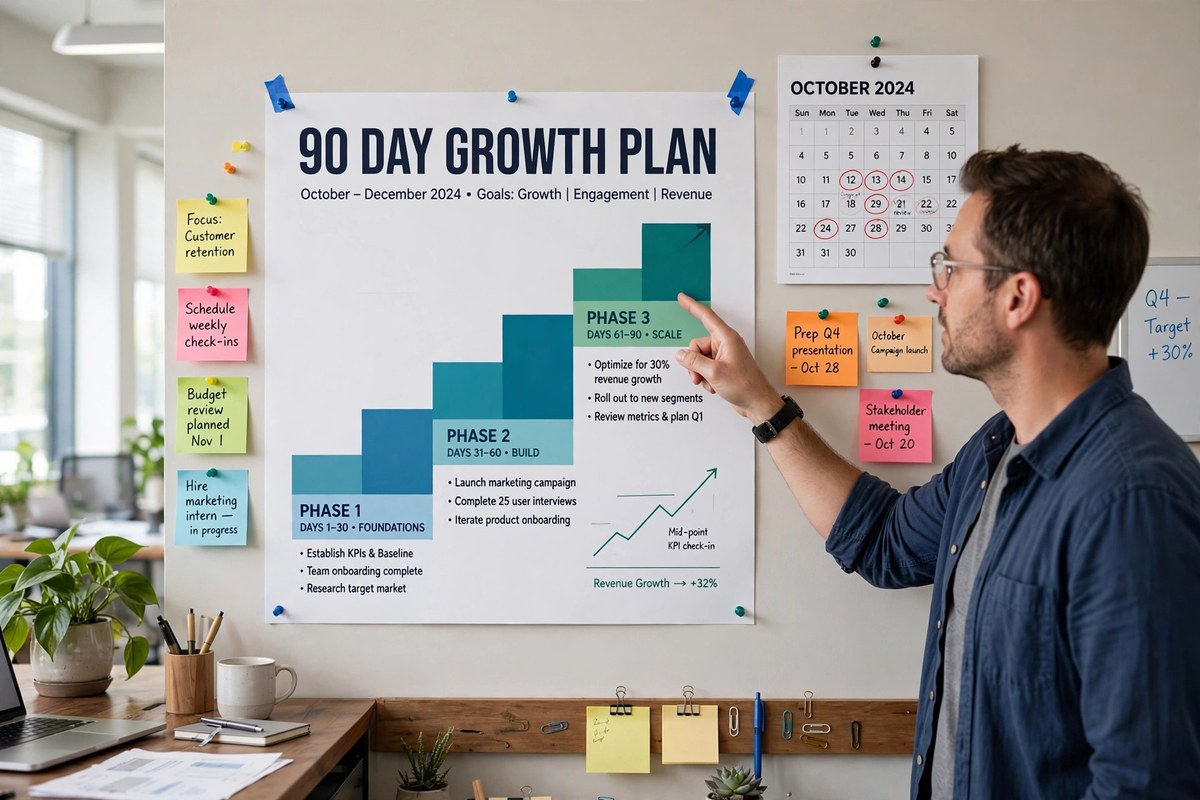
| Days 1 to 30 | One buyer, one offer, personal outreach | First 10 to 25 customers |
| Days 31 to 60 | One free channel, email capture, first reviews | Reach 100 customers |
| Days 61 to 90 | Small paid tests, referrals, creator content | On the road to 500, with a repeatable system |
From there, reaching 1,000 is a matter of repeating the winning system and fixing leaks. Improve the product page conversion rate before raising ad spend, because a page that converts twice as well halves your cost per customer. That discipline is what separates stores that scale from stores that simply spend more.
Step 6: Track Only the Numbers That Decide Spending
Five numbers are enough at this stage: visitors per channel, conversion rate, cost per customer, average order value, and repeat purchase rate. If cost per customer climbs toward your average order value, pause that channel and fix the page or the offer first. Our how to measure digital marketing ROI for small business guide explains the one-line ROI formula and the costs most owners forget, such as tools, time and content production.
Review the numbers weekly, not daily, and change one thing at a time. A store that changes its headline, its price and its ads in the same week learns nothing about which change worked. Patience here is not passive: it is how you build a system you can trust with a bigger budget.
Mistakes That Slow the First 1,000
Running ads before the offer is proven. Paid traffic amplifies whatever your page already does. If the page does not convert warm visitors, ads will simply buy expensive proof of that fact.
Chasing every channel at once. Five weak channels teach you nothing. One strong channel, tested properly, teaches you everything you need for the next one.
Discounting too early and too often. A welcome offer is fine. Permanent discounts train buyers to wait, shrink your margin, and hide the real reason people are not buying.
Ignoring retention. A second purchase from an existing customer is far cheaper than a first purchase from a stranger. Email, packaging inserts and a simple loyalty nudge keep early buyers coming back, and repeat buyers refer friends.
Conclusion
Knowing how to get your first 1000 customers online store by store comes down to a repeatable order: define one buyer, win the first 10 by hand, find one channel that repeats, capture emails, recover abandoned carts, and only then scale with paid ads and referrals. It is slower than a viral hope and far more reliable. Start this week with ten personal conversations, build the system around what those buyers teach you, and the road to 1,000 becomes a plan instead of a wish.
Frequently Asked Questions
How long does it take to get your first 1000 customers for an online store?
It depends on price, audience and how much time you put into outreach, but most new stores should measure the journey in months, not weeks. The first 100 are the slowest because everything is manual. Once one channel repeats and referrals start, the pace quickens, and a realistic plan runs 90 days to reach the first few hundred, then scales from there.
How can I get my first 1000 customers with no ad budget?
Use free channels in order: personal outreach, niche communities, short video content, a lead magnet with email capture, and micro creator partnerships. These cost time rather than money, and they also produce reviews and testimonials that make later paid ads far more effective.
Should I run paid ads to get my first customers?
Not until a small number of people have bought without ads and your product page converts. Ads are best as a scaling tool for a proven offer, not a discovery tool for an untested one. When you do start, test one channel, one product page and two or three creatives with a small daily budget.
What is the best channel for a new online store?
There is no single best channel. Visual, impulse products do well with short video and creator content, while problem-solving products do better with search content and community answers. Test one channel for two weeks against a clear target, keep the winner, and only then add a second.
How do I know if my store is ready for more traffic?
Check three things: a product page that answers objections and converts warm visitors, at least a few genuine reviews, and an email capture plus cart recovery flow in place. If any of those are missing, fix them before paying for traffic, because traffic sent to a leaky store is money spent learning nothing.