
Digital Marketing for Dental Clinics: 9 Patient-Getting Tactics That Work in 2026
Digital marketing for dental clinics in 2026 comes down to one thing: being the obvious choice when someone nearby searches for a dentist. That means a complete Google Business Profile, a steady stream of genuine reviews, treatment pages that answer real questions, and paid ads aimed at high-value treatments. Not viral reels. Not a prettier logo.
Most clinics do not have a traffic problem. They have a conversion problem. Patients find them, then choose the competitor with 300 reviews and a booking button. The nine tactics below fix exactly that, in order of impact.
9 Digital Marketing for Dental Clinics Tactics That Work in 2026
1. Own your Google Business Profile (GBP)
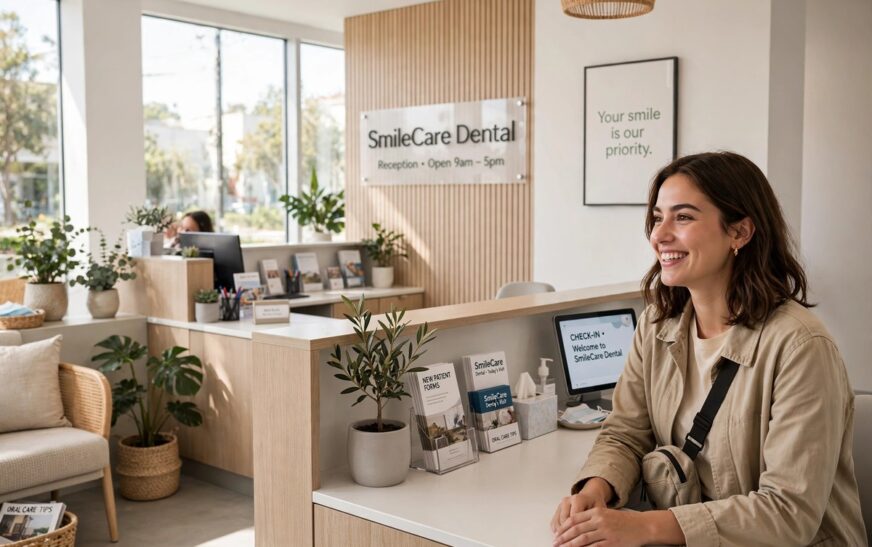
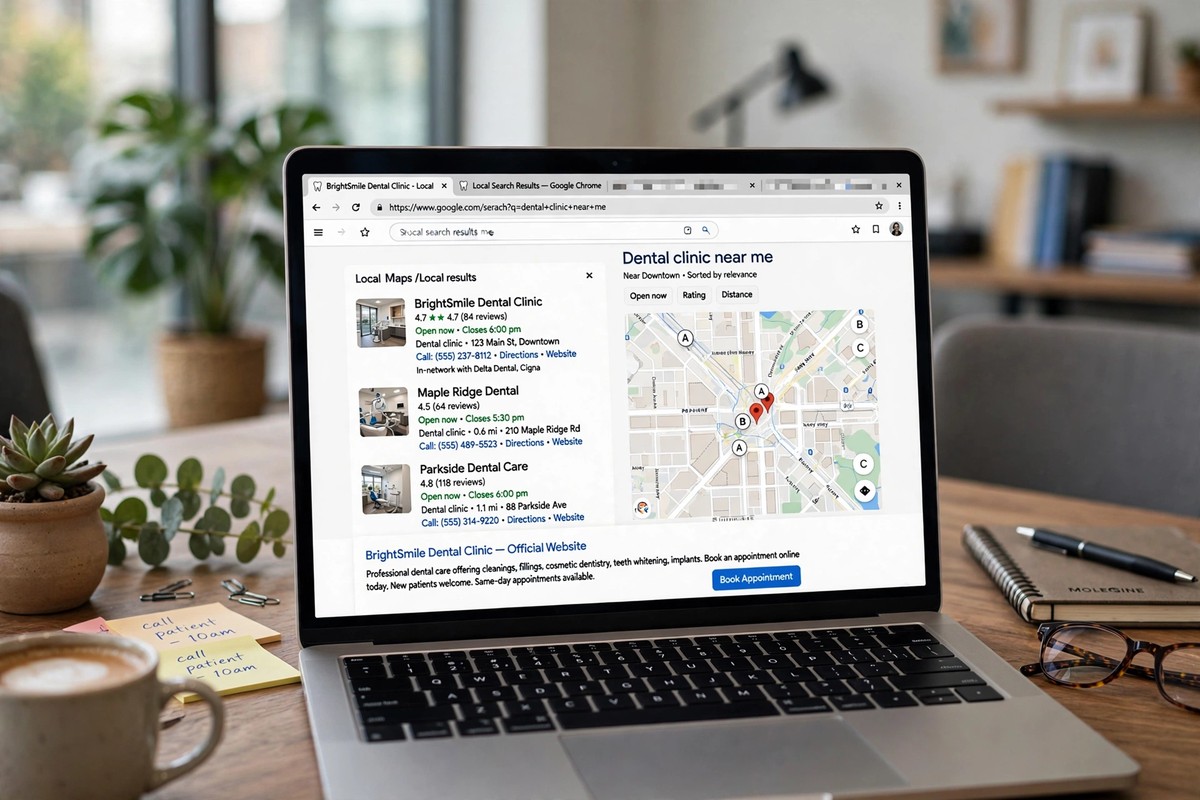
Your Google Business Profile is your new homepage. For “dentist near me” searches, patients decide from the map pack before they ever visit your website. Claim the profile, fill every field (services, hours, booking link, attributes like wheelchair access), and add real photos of the clinic and team.
Post to your profile weekly: a new-patient offer, a team introduction, a short treatment tip. It takes ten minutes and signals to Google that the business is active. A realistic target: get into the local top three within 60 to 90 days if your reviews and categories are in order.
2. Build a review engine, not a review hope
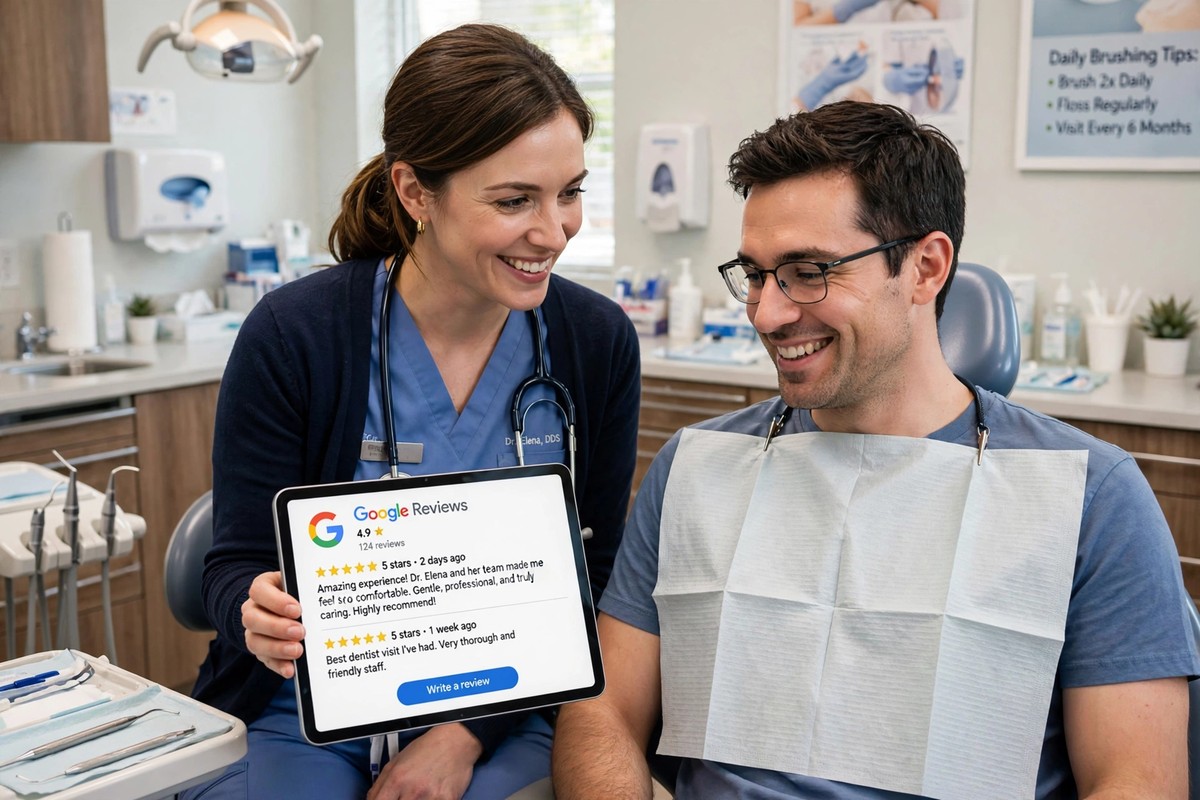
Reviews are both a ranking factor and a conversion factor. Clinics with a 4.8 rating and recent reviews consistently outrank and out-book clinics with a higher rating but stale reviews. The fix is a simple system: after every appointment, send a one-click SMS or email link to your Google review page.
Respond to every review, good or bad, within 24 hours. For negative reviews, keep it calm and professional, and never disclose patient details. A word-for-word script at reception helps: “If you were happy with your visit today, a quick Google review really helps other patients find us.” Aim for 5 to 10 new reviews per month.
3. Run Google Ads for high-value treatments only
Google Ads is the fastest way to fill chairs, but only if you aim it at treatments worth the cost. Emergency dentistry, dental implants, and Invisalign convert because the patient is in pain or already decided. Bidding on generic “dentist” terms usually wastes money.
Split campaigns by procedure, send each ad to its own landing page, and track cost per booked consultation, not just cost per click. A realistic starting budget is £1,000 to £2,500 per month in the UK or $1,500 to $4,000 in the US. Expect first enquiries within days, and meaningful data within three weeks.
4. Turn social media into social proof
Patients are nervous about dentists. Your Instagram and TikTok should reduce that fear, not win design awards. Post patient stories (with written consent), before-and-after results, short videos of the dentist explaining what a root canal actually feels like, and honest team moments.
Short-form video outperforms everything else for engagement. Two or three genuine posts per week beat a polished monthly campaign. As HubSpot’s marketing research keeps showing, audiences trust real people far more than polished brand content, and clinics are no exception.
5. Create one landing page per treatment
A single “Services” page listing everything you do ranks for nothing and converts nobody. Build dedicated pages for implants, Invisalign, emergency dentistry, and whitening, each answering the questions patients actually ask: how much does it cost, does it hurt, how long does it take, what happens at the first visit.
These pages do double duty. They rank for long-tail searches like “dental implants cost Manchester” and they pre-answer questions so consultations are shorter and patients arrive calmer. Before publishing, run each page through a technical SEO audit checklist so speed, headings, and schema do not hold you back.
6. Bring patients back with email recall
Acquiring a new patient costs five to seven times more than keeping one. A simple recall system fills the diary with almost zero ad spend: automated reminders for six-month checkups, post-treatment care messages, and a gentle nudge when someone is overdue.
Email and SMS tools cost £30 to £80 per month for a small clinic. Set up three automations and you are done: appointment reminders (cuts no-shows), recall campaigns (brings patients back), and review requests (feeds tactic two). Birthday messages are a nice touch, but recalls pay the bills.
7. Make the website work on phones first
Over 60 percent of dental searches happen on mobile, usually with an urgent need: a toothache at 11pm, a chipped tooth on holiday. If your site is slow or the booking button is hard to find, the patient taps the next result.
Check the essentials with a mobile SEO checklist: pages loading under three seconds, tap-to-call buttons, a booking form that works with one thumb, and accurate opening hours. For most clinics, these basics matter more than a redesign.
8. Get ready for AI search
Patients increasingly ask ChatGPT, Gemini, and Google’s AI Overviews for “best family dentist near me that takes anxious patients”. These tools cite clinics whose websites clearly state services, location, prices, and real patient reviews.
You cannot buy your way into AI answers, but you can make yourself quotable. Publish clear FAQ content on treatment pages, keep your GBP details consistent everywhere, and collect detailed reviews that mention specific treatments. It is early days, but clinics that build this foundation now will have an advantage when AI search fully arrives.
9. Measure what books chairs, not what looks good
Likes do not pay salaries. Track the numbers that matter: calls from your Google Business Profile, booked consultations per channel, cost per acquired patient, and recall rate. Ask every new patient “how did you hear about us” and record it.
Set up call tracking on the website and GBP so you know whether the phone rings because of ads, maps, or organic search. Review the numbers monthly and move budget toward whatever books the most profitable treatments. Small-business digital marketing strategies only work when you let the data decide where the money goes.
How Much Should a Dental Clinic Spend on Marketing?
There is no magic percentage, but honest ranges help. A small clinic aiming for steady growth can start with £800 to £2,000 per month (or $1,000 to $3,000 in the US): mostly Google Ads for high-value treatments, plus staff time for reviews and GBP posts. Clinics competing in big cities often spend £3,000 to £8,000 monthly across ads, SEO, and content.
Whatever the budget, spend in this order: GBP and reviews first (free), Google Ads for implants and emergencies (fast), then SEO and content (compounding). Skip expensive branding campaigns until the basics are converting.
Digital Marketing for Dental Clinics: Quick Summary
- Own your Google Business Profile and post weekly.
- Build a review engine: ask after every appointment, reply to all.
- Run Google Ads only for high-value treatments like implants and Invisalign.
- Use social media for trust: real team, real patients, real answers.
- Create one landing page per treatment with honest cost and pain answers.
- Automate email and SMS recall to fill the diary cheaply.
- Make the website fast and bookable on mobile.
- Prepare for AI search with clear FAQs and consistent business details.
- Measure booked consultations per channel and follow the data.
Conclusion
Digital marketing for dental clinics is not about doing everything. It is about doing the few things that book consultations: a dominant Google Business Profile, a constant flow of reviews, ads aimed at profitable treatments, and a website that answers questions and takes bookings on a phone. Start with the free wins this week, add paid ads next, and give SEO three months to compound. Clinics that follow this order stop chasing patients and start choosing them.
Frequently Asked Questions
How much does digital marketing for dental clinics cost?
A small clinic can start with £800 to £2,000 per month in the UK (or $1,000 to $3,000 in the US), mainly for Google Ads on high-value treatments. GBP optimisation, reviews, and social media cost staff time rather than money. Larger city clinics competing aggressively often spend £3,000 to £8,000 monthly.
How long does digital marketing for dental clinics take to show results?
Google Ads can bring enquiries within days. A review push and GBP clean-up usually lift calls within two to four weeks. Local SEO and content take three to four months to compound. Be suspicious of anyone promising page-one rankings overnight.
Should a small clinic run Google Ads or focus on SEO?
Do both, but sequence them. Start with Google Ads for emergency and high-value treatments to get patients now, and invest in SEO and treatment pages in parallel for cheaper patients later. Ads buy time; SEO buys freedom from ad spend.
How can a clinic get more Google reviews without breaking the rules?
Ask every happy patient with a simple one-click link sent by SMS or email after the visit. Never offer discounts or gifts for reviews, and never write fake ones. Reply to each review within a day, and keep responses to negative reviews calm and free of patient details.
What is the single most important marketing channel for a dental clinic in 2026?
Your Google Business Profile. It appears before your website in local searches, drives calls and direction requests directly, and costs nothing. A complete profile with recent photos, weekly posts, and a steady stream of reviews beats almost any other single channel for new-patient bookings.