
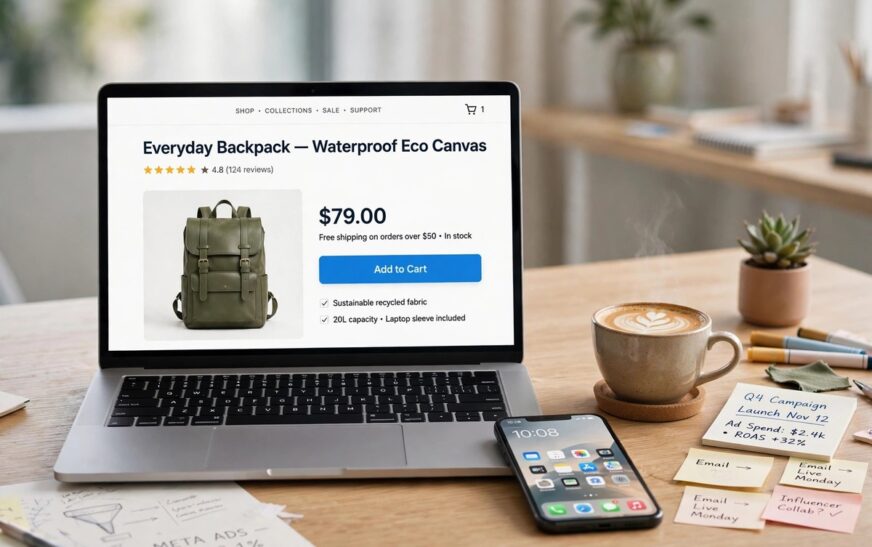
Most product pages fail for one reason: the copy describes the product instead of selling it. Visitors scan a wall of specs, feel nothing, and leave. Product page copywriting that converts answers the three questions every buyer asks in seconds: is this for me, will it work, and is it worth the price. Here is a five-step formula you can apply to any product page in under an hour.
Product Page Copywriting That Converts: The 5-Step Formula
The formula follows the order a buyer thinks in, not the order a manufacturer lists specs in.
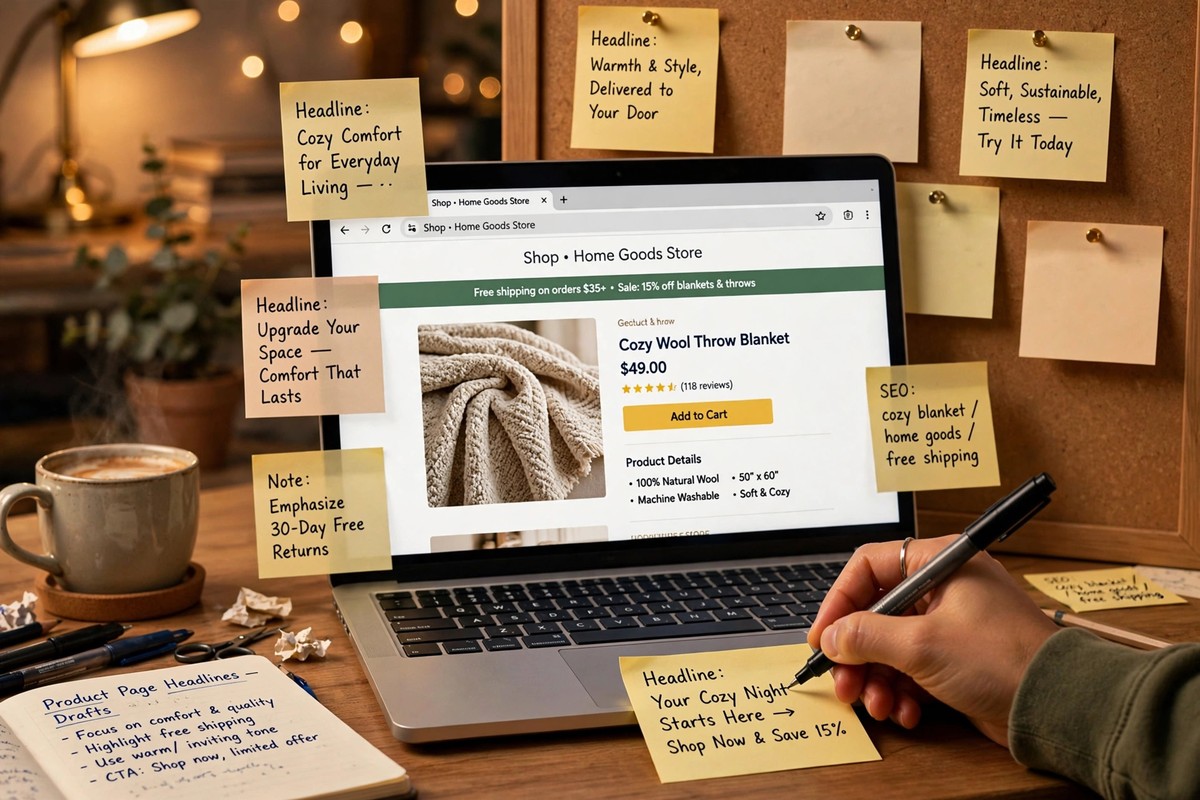
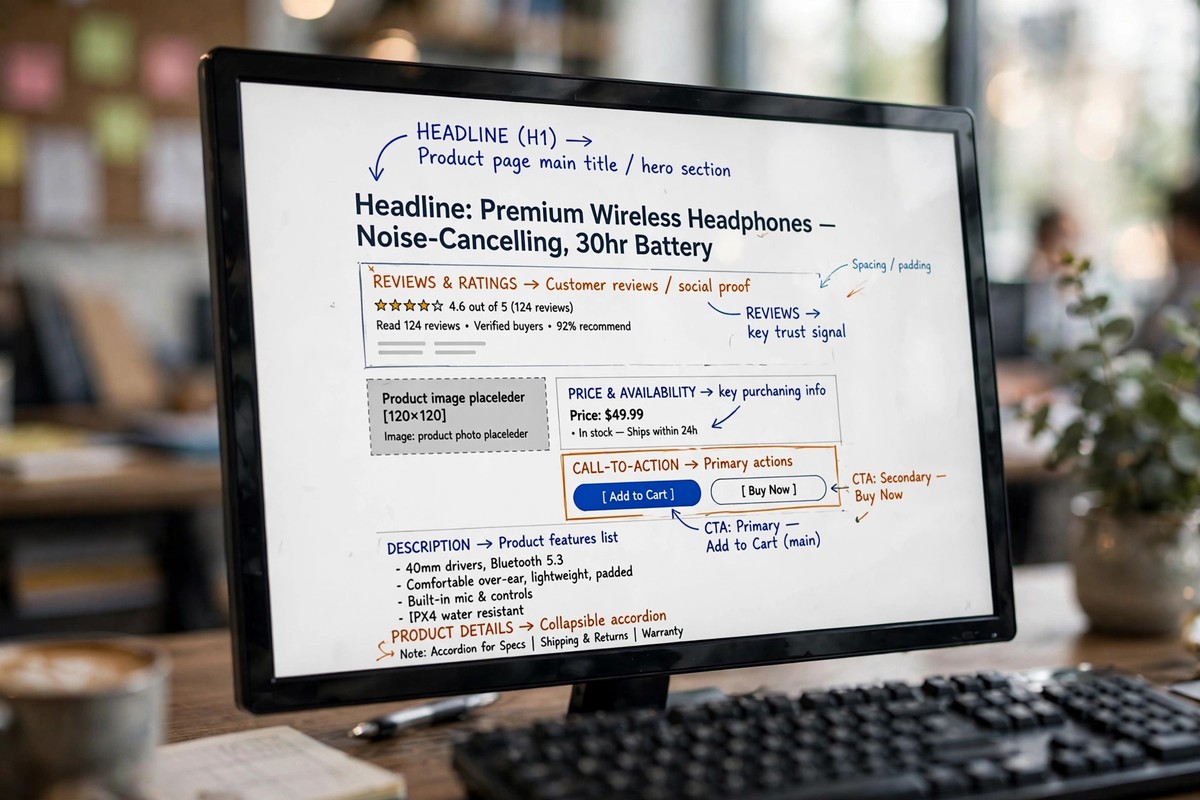
Step 1: An outcome-first headline. Lead with what the buyer gets, not what the product is. “Sleep through the night without back pain” beats “Orthopaedic memory foam pillow 60 x 40 cm.” The headline is the one line most visitors read, so make it a promise, not a label.
Step 2: A one-sentence value promise. Say who it is for and what changes. “Built for side sleepers who wake up stiff, it keeps your neck aligned from lights-out to morning.”
Step 3: Benefit-led bullets. Turn every feature into a benefit with the “so what” test. Feature: 750 ml double-wall steel. So what? Benefit: “Keeps drinks cold for 24 hours, so your water is still icy after a full day out.” Three to five bullets is the sweet spot.
Step 4: Objection busters before the buy button. Read your reviews, list the top three doubts, and answer each in one line near the price: sizing, delivery time, returns. If carts still get abandoned, pair this with proven abandoned cart email sequence examples to win some of them back.
Step 5: A friction-free CTA with reassurance microcopy. “Add to Basket” is fine, but the words around it do the heavy lifting. “Free 30-day returns” and “Dispatched in 24 hours” right under the button beat a prettier button every time.
Before and After: The Formula in Action
Before (spec-first): “Premium 750 ml double-wall vacuum-insulated stainless steel water bottle with BPA-free flip lid and powder-coat finish.”
After (conversion copy): Headline: “Ice-cold water from the first sip to the last.” Promise: “For commuters and gym-goers tired of lukewarm bottles by noon.” Bullets: cold 24 hours, hot 12; fits car cup holders; one-handed flip lid. Microcopy under the button: “Free returns for 60 days. Ships in 24 hours.”
Same product, same price. The second version sells an outcome, names the buyer, and removes the three biggest doubts before the click.
Headline Formulas That Work on Product Pages
The outcome formula: [Result] without [annoyance]. “Wrinkle-free shirts without the ironing board.”
The identity formula: For [buyer type] who [want X]. “For new parents who need coffee that stays hot.”
The proof formula: [Number] [buyers] can’t be wrong. Only use numbers you can stand behind.
The comparison formula: All the [benefit] of [expensive alternative], none of the [cost]. “Barista-level espresso at home, without the £400 machine.”
Mine Your Reviews for the Words That Sell
Open your last fifty reviews and highlight every phrase describing a result, a feeling, or a solved problem. “Survived a full school year in my teenager’s bag” is a headline no brainstorm would invent. Group the phrases into outcomes, objections, and surprises, then drop the best into your bullets and microcopy. Real customer language beats guessed-at benefits, and it keeps improving as new reviews arrive.
Better copy also needs traffic to convert. Run a technical SEO audit checklist for Shopify stores so visitors actually find you.
Objection Busters: Answer Before They Leave
Every product has two or three objections that kill most sales. A sizing line that says “True to size, 92% of buyers agree” beats a generic chart. “Order by 2 pm for next-day delivery” beats “Fast shipping.” Put the guarantee where the doubt lives: returns next to the price, warranty next to the specs.
Conclusion
Product page copywriting that converts is not about clever words. It is a repeatable formula: an outcome-first headline, a one-sentence promise, benefit-led bullets, objection busters beside the price, and reassurance microcopy under the CTA. Apply it to your top-traffic pages first, mine your reviews for customer language, and test one headline at a time. For the traffic side, our TikTok Shop marketing strategy guide and compare TikTok ads vs Meta ads breakdown show where e-commerce brands find buyers in 2026. Shopify’s own guide to lifting add-to-cart rates agrees: descriptive, customer-minded copy with benefits ahead of features.
Frequently Asked Questions
How long should product page copy be?
As long as the price and complexity demand. A £15 phone case converts with a strong headline, three bullets and trust microcopy. A £500 mattress needs outcomes, comparisons, materials, FAQs and guarantees. Match copy length to the size of the buying decision.
Can I just use the manufacturer’s product descriptions?
You can, but you will convert worse and rank worse. Manufacturer copy is written for every retailer, so it matches thousands of identical pages and speaks in specs, not benefits. Rewrite at least the headline, the first two bullets and the CTA microcopy in your own customer language.
Is AI-generated product page copywriting that converts a real risk?
AI is a fine first-draft tool and a poor final writer. It produces smooth, generic copy that sounds like every competitor using the same prompts. Use it for headline variants and bullet options, then rewrite the winners with real review language, real numbers and your brand voice.
How do I test product page copy without much traffic?
Skip formal A/B tests, they take too long to reach significance on low traffic. Change one element at a time, headline first, run it for two to four weeks, and compare conversion rate and revenue per visitor with the prior period.
What matters more: the headline or the product description?
The headline, by a wide margin. It is the most-read line on the page and decides whether the description gets read at all. With twenty minutes to spare, spend fifteen on the headline and CTA microcopy, and five on everything else.